Charging Station Selection and Cost-Effective Solutions: A Comprehensive Guide
Ⅰ. Charging Pile Types and Technology Selection
AC vs. DC Charging Pile Comparison
AC Slow Charging Pile (7-22kW)
Applicable Scenarios: Homes, offices, residential communities (charging time 6-10 hours).
Advantages: Low cost (¥1,000 - ¥4,000 per unit), minimal battery damage, simple installation.
Limitations: Low power, cannot meet fast charging demands.
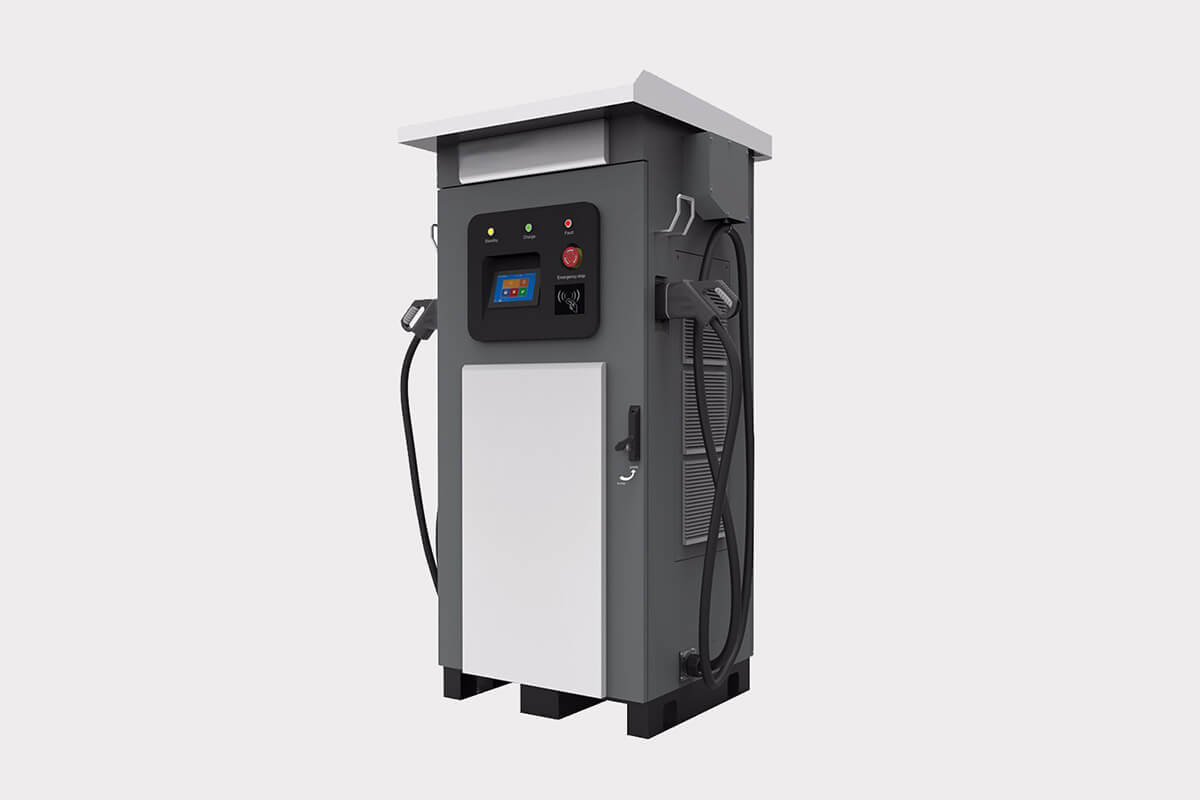
DC Fast Charging Pile (30-480kW)
Applicable Scenarios: Public charging stations, highways, commercial centers (charges to 80% in ~30 minutes).
Advantages: High power output (e.g., 120kW dual-gun pile), supports simultaneous charging of multiple vehicles.
Limitations: High cost (¥50,000 - ¥200,000 per unit), requires grid capacity expansion support.
Key Performance Parameters
Protection Level: Must be ≥ IP54 (dustproof and water-resistant).
Safety Protection: Overvoltage/overcurrent/leakage/lightning protection, emergency stop function (compliant with GB/T 18487.2 standard).
Efficiency Requirements: Conversion efficiency ≥ 94%, power factor ≥ 0.98.
Smart Management: 4G connectivity, remote monitoring, APP payment (e.g., QR code/RFID card).
II. Scenario-based Selection Plan
Application Scenario |
Recommended Type |
Configuration Suggestions |
Cost Range |
Home/Private Garage |
7kW Wall-mounted AC Pile |
Single gun, wiring within 30m, IP54 protection |
¥2,000 - ¥5,000 (incl. install) |
Commercial Plaza/Parking Lot |
120kW Dual-gun DC Pile |
Split-type design, multi-gun power sharing, touchscreen operation |
¥80,000 - ¥150,000 per unit |
Bus/Logistics Center |
240kW Split-type DC Pile |
10-gun flexible power sharing, compatible with high-capacity batteries |
¥200,000 - ¥400,000 per set |
Highway Service Area |
180kW+ Ultra-fast Charging Pile |
Dual-gun rotary charging, rain canopy, emergency backup power |
¥150,000 - ¥250,000 per unit |
Selection Principles:
Efficiency First: Choose AC piles for homes; choose DC piles for public scenarios.
Safety & Reliability: Must pass CQC/CNAS certification.
Scalability: Reserve power expansion interfaces (e.g., 400kW split-type pile supports future capacity increase).
III. Implementation Key Points & Cost Optimization
Power Infrastructure
Grid Connection: DC piles require 380V three-phase voltage; AC piles require 220V single-phase.
Capacity Expansion Cost: Power modification for commercial scenarios can cost ¥100,000 - ¥500,000 (incl. transformer/cables).
Installation & Operation/Maintenance (O&M)
Wiring Specifications: Use cables ≥10mm² for DC piles, use 6mm² BV wire for AC piles.
O&M Cost: Annual maintenance cost is approximately 5%-10% of equipment value.
Policy & Subsidies
Local governments provide equipment subsidies (e.g., covering up to 30% of cost) and preferential electricity tariffs for public charging stations.
IV. Future Technology Trends
High Power: >11kW home AC piles and 480kW split-type DC piles become mainstream, adapting to 800V high-voltage platform vehicles.
V2G Technology: Enables bidirectional power flow between vehicles and the grid, requiring charging piles to support smart scheduling protocols.
Centralized Flexible Charging: Split-type DC piles dynamically allocate power, improving utilization (e.g., 400kW power cabinet supports flexible output to 10 charging guns).