Millisecond fault capture:cable O&M enters the digital era distributed cable fault location solution
This solution leverages a distributed cable fault locator built on high-frequency travelling-wave acquisition + edge computing + travelling-wave time-difference positioning algorithms.
It delivers instantaneous fault capture, metre-level distance measurement, AI-driven fault-type classification, 5-minute alarm push, and 24/7 online monitoring – closing the full "capture → locate → diagnose → alert → trace" loop.
The result: high-voltage cable O&M shifts from reactive post-fault investigation to proactive digital lean operations.
1. Industry Pain Points: The "Three Difficulties" of Cable O&M
| Difficulty | Description |
|---|---|
| 1. Elusive fault capture | Earth faults, insulation breakdown, and cable flashovers are typically transient or recurrent. Conventional monitors miss these short-duration signals – the fault "comes and goes" but leaves a latent hazard. |
| 2. Fault location is slow | Cables run buried, in tunnels, or in trenches. Manual section-by-section patrol takes hours to days, wasting the critical repair window. |
| 3. Root-cause classification is guesswork | Lightning strikes, mechanical damage, insulation ageing, and flashovers each demand a different response. Without data, crews fall back on "one-size-fits-all" troubleshooting – inefficient and costly. |
2. Solution Architecture
A three-layer "front-end acquisition → edge computing → cloud platform" architecture:
| Layer | Components | Function |
|---|---|---|
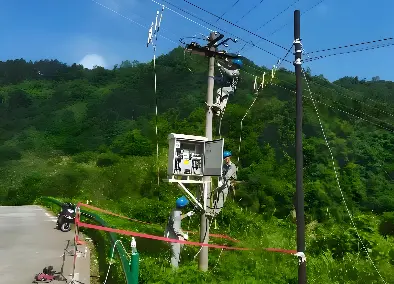
| Perception | Distributed front-end acquisition terminals (deployed along the line) | High-frequency sampling of cable current/voltage transients; captures transient/intermittent fault signals |
| Computing | Edge computing units | Transient-signal recognition, traveling-wave time-difference calculation, fault-feature extraction; rapid local diagnosis |
| Platform | Cloud O&M platform | Alarm push, data traceability, multi-circuit centralized management, digital O&M reports |
3. Four Core Capabilities
3.1 Precise Capture of Transient Faults
Front-end terminals continuously record transient waveforms at high sampling rates, catching ground faults, insulation breakdowns, and flashovers – closing the blind spot of conventional equipment that "cannot see short-duration hidden faults".
3.2 High-Precision Fault Location & Diagnosis
Using the traveling-wave time-difference algorithm calibrated with actual line parameters, the system automatically computes fault distance and section, delivering meter-level accuracy without manual patrol and giving repair crews an exact dig-point.
3.3 Intelligent Fault-Type Classification
An on-board multi-dimensional feature-recognition model automatically distinguishes four fault categories – lightning strike, external-force damage, insulation ageing, transient flashover – enabling differentiated response and post-event review.
3.4 All-Condition Stable Online Monitoring
Front-end hardware is hardened for tunnel environments (high temperature, humidity, flooding, dense electromagnetic interference (EMI)) and runs 24/7/365, providing true continuous online monitoring.
SLA add-on: Fault information pushed to O&M personnel within 5 minutes (via 4G/fiber; local buffering with store-and-forward and automatic retransmission on link recovery).
4. Technical Highlights
- Travelling-wave time-difference positioning – Δt × propagation velocity = fault distance; line-parameter calibration eliminates wave-velocity error. Compliant with IEC 60076-15 / IEEE C37.118 travelling-wave measurement requirements.
- Edge-first computing – Transient signals are identified and feature-extracted at the terminal, slashing backhaul bandwidth and accelerating alarms. Communication per IEC 61850 (GOOSE / Sampled Values).
- AI feature model – Multi-dimensional classification on waveform amplitude, polarity, duration, and harmonic content; continuously retrained and refined.
5. Quantified Value Comparison
| O&M Aspect | Traditional Mode | With This Solution |
|---|---|---|
| Hidden-fault detection | Missed; hazards accumulate | Instant capture; proactive warning |
| Fault location | Manual patrol, hours–days | Metre-level; minutes to lock |
| Fault-type judgment | Experience-based | AI auto-classification (4 types) |
| Alarm delivery | Manual discovery/report | ≤ 5 min push (network permitting) |
| Data management | Scattered records | Cloud traceability; digital O&M reports |
6. Deployment & Implementation Guidelines
Siting principle – Place front-end terminals per travelling-wave ranging sections (priority: critical joints, tunnel portals, trench segments) to guarantee dual-ended measurement for any fault point.
Communications – 4G / fiber dual-path optional; store-and-forward on link loss included in acceptance criteria.
Parameter calibration – On-site calibration of propagation velocity, cable length, joint count to secure ranging accuracy.
Integration – Platform alarms interface with existing SCADA (supervisory control and data acquisition) / work-order systems for closed-loop handling.
Acceptance KPIs (contract-ready)
-
Location error: verified "metre-level" on test line under defined conditions
-
Alarm latency ≤ 5 min
-
Fault-type classification accuracy – vendor must supply sample size and confusion matrix
Risk mitigation
-
Weak-signal detection: on-site sensitivity tuning during commissioning; adjustable threshold reserved in firmware.
-
Harsh environments: IP67 enclosures, conformal-coated PCBs, redundant communication paths; environmental-stress screening (thermal cycling, humidity, electromagnetic compatibility (EMC) per IEC 61000-4) in FAT/SAT.
Executive Summary
This solution deploys the distributed cable fault locator, built on high-frequency traveling-wave acquisition, edge computing and time-difference-of-arrival ranging, to capture transient faults, locate faults to meter-level accuracy, classify fault types via AI and push alarms within 5 minutes while monitoring 24/7.
It transforms HV cable maintenance from passive, manual trouble-shooting into data-driven digital operation, covering buried, tunnel and trench cable routes of all voltage classes.
Deployed Equipment
-
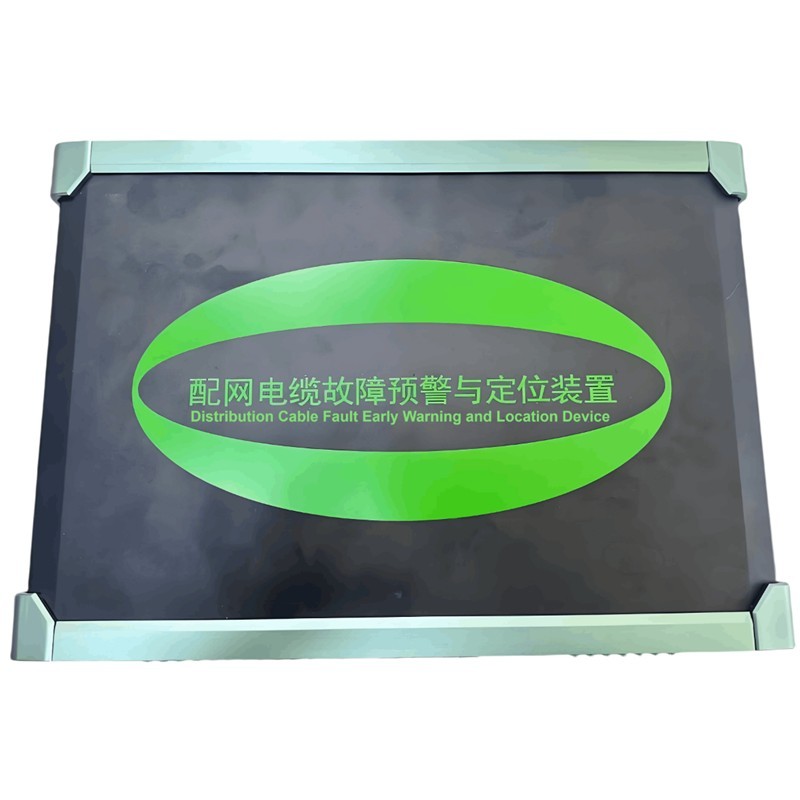 RWD series Distribution Cable Fault Early Warning and Location DeviceDescription :This device has the functions of real - time monitoring and accurate early - warning. Through advanced sensor technology, it conducts all - round monitoring of the cable's operating status, including important parameters such as current, voltage, temperature, and partial discharge. Once an abnormal fluctuation in the parameters is detected, the system can quickly identify potential fault hazards and issue early - warning signals in a timely manner. This enables maintenance personnel
 -
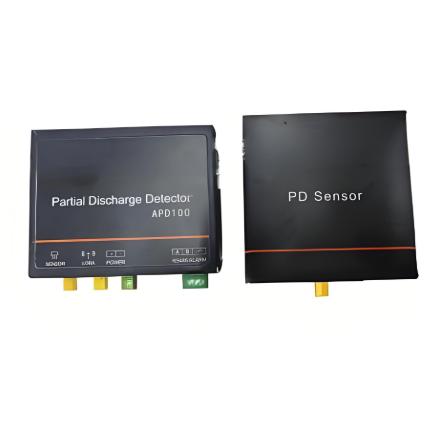 UHF Partial Discharge DetectorGeneralThe APD series high-voltage switchgear partial discharge monitoring device detects the electromagnetic wave radiation generated along with partial discharge and automatically determines the actual detection frequency of on-site partial discharge. Then, data such as the number and frequency of partial discharge detected are uploaded to the server.Feature Power supply: DC10~30V, ≤3W; Standard 220V adapter; Measuring range: -60dBm~+10dBm; Measurement content: discharge amplitude, disc
 -
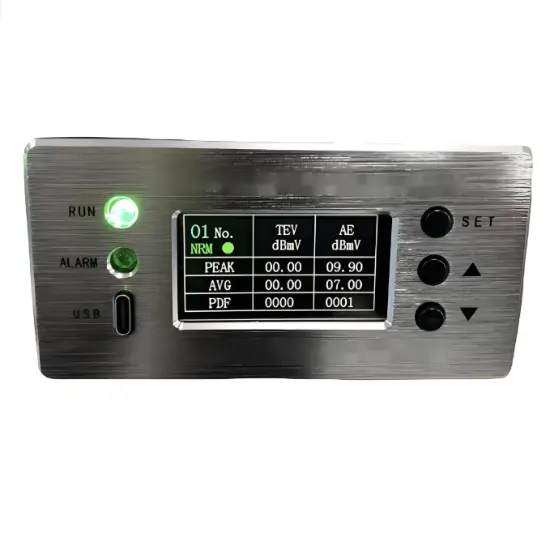 RWJS Partial Discharge Online Monitoring System for Ring Main UnitsDescription :To meet the development requirements of non-power interruption and Condition based maintenance, real-time monitoring of power equipment operation status under uninterrupted power supply is achieved through intelligent technologies such as the Internet of Things (IoT) and smart sensors. By utilizing intelligent sensor monitoring technologies including Transient Earth Voltage (TEV), Acoustic Emission (AE) & Ultrasonic waves, and temperature sensing, the operational status of switc
Reference Projects
-
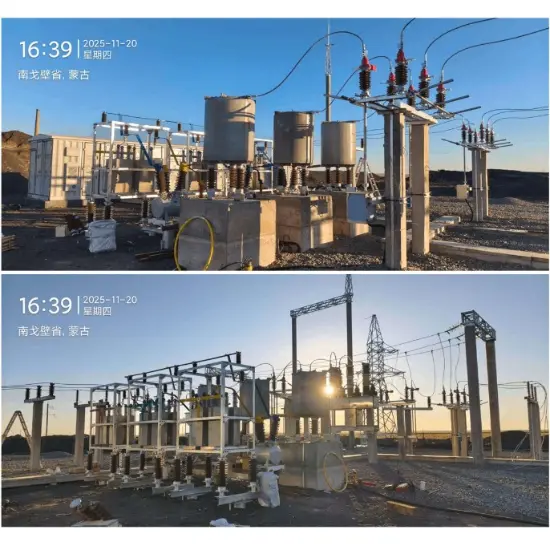 Mongolia Gold Mine High Voltage Reactive Power Compensation ProjectMongolia Gold Mine High Voltage Reactive Power Compensation Project01 Project Overview1.1 Project BackgroundIn November 2025, 30 units of the RWTBBZ-0.75-720 kvar reactive power compensation units were deployed for Mongolia’s gold mine power grid upgrade project.Developed and manufactured by RW Energy, the equipment was installed across multiple mining sites and substations in South Gobi Province.These units deliver critical reactive power compensation, voltage stabilization, and power quality e
 -
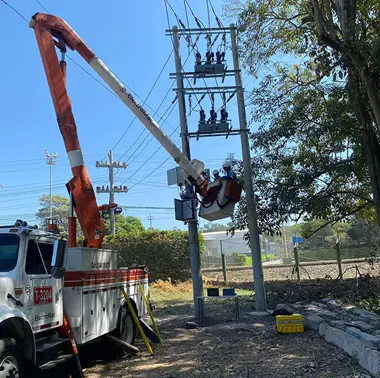 RW Energy Colombia PV Plant 35 kV Recloser Controller Project Case StudyFacing the frequency fluctuation and grid connection challenges of Colombia’s low-inertia photovoltaic power grid, this solution leverages customized recloser control and optimized frequency protection technologies to precisely adapt to the local 60Hz grid standard. It effectively addresses grid fluctuation issues under complex grid connection conditions, delivering a highly reliable and strong anti-interference grid protection solution for photovoltaic power plants and ensuring their stable and
 -
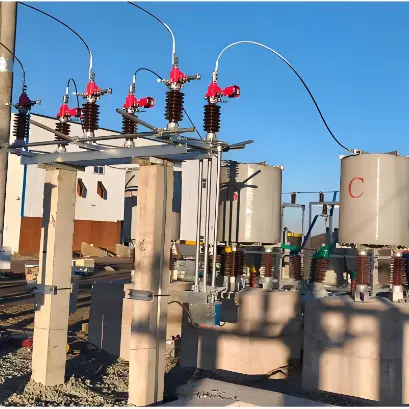 Mongolia South Gobi Coal Washing Plant 35 kV Power Quality Success StoryThe 35 kV power quality improvement project at a coal washing plant in South Gobi Province, Mongolia, is a dedicated retrofit addressing the severe harmonic pollution caused by the concentrated connection of variable-frequency-drive (VFD) equipment in the coal washing industry. A 5000 kvar H5 filter compensation bank was installed to deliver harmonic mitigation and reactive power compensation in one.Since commissioning, the dominant 5th harmonic has been effectively filtered, harmonic distortion
 -
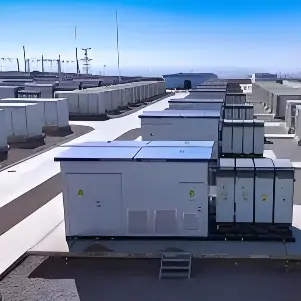 Angola Dadi Energy Storage 35 kV Power Quality Improvement success storyThe Angola Dadi Energy Storage power quality improvement project is a 35 kV power quality retrofit implemented on an existing energy storage plant. On-site nonlinear, high-harmonic loads such as inverters — power conversion systems (PCS) — are densely concentrated, a typical harmonic-source-intensive scenario in which harmonic pollution seriously hampers production efficiency and product quality.An H5+H7 filter compensation bank with a total capacity of 7500 kvar was provided to deliver harmonic