Prefabricated Boost Transformer Substation Solution for Photovoltaic Power Plants in Skid-Mounted Design
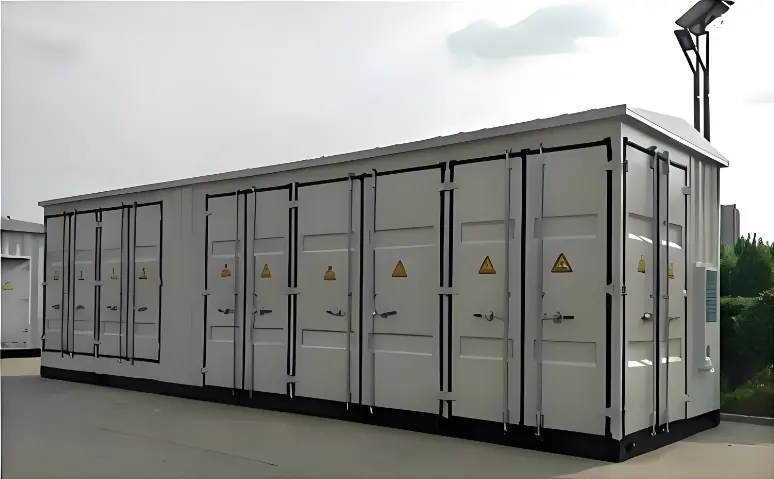
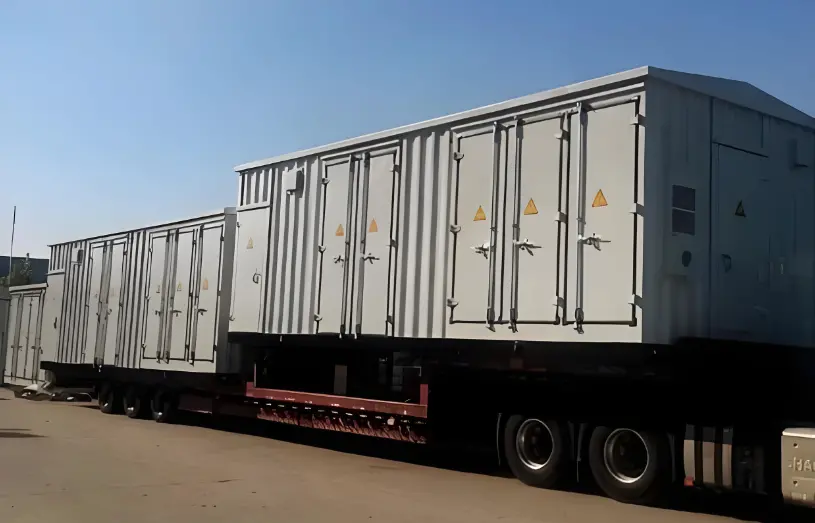
The Rockwell Energy modular prefabricated step-up substation integrates medium-voltage switchgear, step-up transformers, and low-voltage distribution into a steel frame that has been factory-assembled and undergone routine testing.
Upon arrival at the site, it can be “put into operation immediately”—shortening the grid connection cycle from the 3–6 months typically required for conventional substations built on-site to about 2 weeks. The amount of civil construction is reduced by 70%, and the open-air natural air-cooling system allows the transformer to operate at full capacity without derating.
1. Why do photovoltaic projects lose revenue at the step-up substation stage?
- Mismatch in construction schedules: While components and inverters can be installed within a few weeks, the 35kV civil engineering and step-up substation takes 3 to 6 months, making it the sole critical path for grid connection.
- Remote sites: weak construction capabilities, numerous concurrent operations, and uncontrollable on-site installation quality.
- Phased expansion: Each phase repeats the civil engineering cycle, making capacity expansion uneconomical.
- On-site operations and maintenance are challenging: power stations are scattered, and there’s a shortage of maintenance personnel.
Taking a 100 MW power plant as an example, each month of delay results in a loss of approximately 1% of annual power generation (this is a rough estimate; the actual figure will depend on project-specific calculations).
II. Standard Product Platform (Committed Values, Not “Examples”)
|
Parameter |
Rockwell Energy skid-mounted platform |
Standard anchor point |
|
Rated voltage |
Medium voltage: 12/24/35/40.5 kV; Low voltage: 400–800 V |
IEC 62271-200 |
|
Transformer capacity |
Oil-immersed, standard series 0.63–7.5 MVA |
IEC 60076 |
|
Short-circuit level |
25kA–3s (standard version), peak 63kA |
IEC 62271-100 |
|
Protection level |
IP43 / IP54 |
IEC 60529 |
|
Cooling method |
Open-style natural air cooling, no capacity reduction. |
IEC 60076-2 |
|
Operating temperature |
-25℃ ~ +55℃ (heating belt option) |
IEC 60068 |
The capacity is selected according to the standard series during the engineering design phase; the platform value will be delivered as promised.
III. Traditional Civil Construction vs. Rockwell Energy Skid-Mounted Systems (Quantitative Comparison)
|
Comparison item |
Traditional civil-engineering substation |
Rockwell Energy Skid-Mounted Substation |
|
Power-on cycle |
3–6 months |
Approximately 2 weeks (subbase + lifting + wiring) |
|
Civil engineering volume |
Concrete buildings, foundations, and fences |
Concrete leveling layer only |
|
Occupying land |
Large, requires an independent plot of land |
Compact single-frame |
|
Field test |
Large volume, affected by weather |
Factory routine testing + on-site joint commissioning |
|
Expand capacity |
One round of civil engineering per issue |
Adding one skid-mounted unit is all it takes to replicate. |
|
Migration |
Not feasible |
Lifting and relocation possible |
4. Engineering Configuration and Grid-Connection Support
- Primary System: Incoming line (ring main/switchgear cabinet, SF6-insulated) → Step-up transformer (oil-immersed) → Low-voltage distribution (400–800V, multiple configurations including circuit breakers/fuse disconnect switches), supporting either string inverter combiner or direct connection to centralized inverters;
- Grid-connection protection and setting value services: Transformer protection, feeder overcurrent protection, and grid-connection protection are configured according to IEC 60255. A set of factory-delivered setting value sheets is provided, and communication interfaces with the substation control AGC/AVC (IEC 61850 / Modbus) are reserved to meet the grid’s requirements for active and reactive power regulation.
- Reactive power support (optional): SVG or capacitor banks can be integrated according to the requirements of the connection point, and the compensation capacity shall be verified based on the PCC voltage requirements.
- Environmental support: shade canopy, temperature control, fire alarm linkage, and full-site monitoring.
V. Acceptance Criteria (Verifiable, Anchored to Standard Clauses)
|
Project |
Acceptance value |
Standard anchor point |
|
Grid-connected harmonics |
35kV grid connection point THDu ≤ 3% |
GB/T 14549-1993 Table 2 / IEEE 519-2022 |
|
Transformer temperature rise |
Top oil ≤ 60K, winding ≤ 65K (ONAN) |
IEC 60076-2 Table 1 |
|
Capacitor discharge (as configured) |
After power failure, the residual voltage within 5 minutes ≤ 50V. |
GB/T 50227-2017 |
|
Protection level |
IP43 / IP54 Measured and Verified |
IEC 60529 |
Six: Why Choose Rockwell Energy?
- Routine factory tests for each skid-mounted unit: Complete test list provided, with report delivered along with the goods.
- One-stop grid connection protection: Setting value adjustment, testing, and AGC/AVC interface integration are all handled by a single provider, reducing conflicts and disputes among multiple vendors.
- Regional Delivery Records: Available for customer reference in the African, Southeast Asian, and Mongolian markets.
- Digital Operations and Maintenance: Remote monitoring via IEC 61850 / Modbus, with alarm integration into the power plant SCADA system.
Deployed Equipment
-
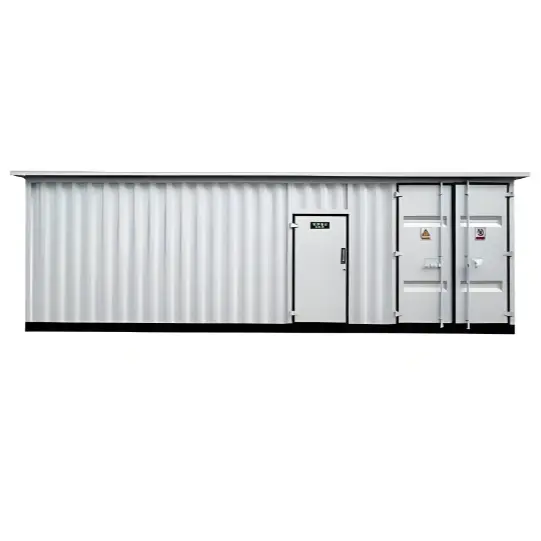 Mobile Container Prefabricated Substation E-House 10kV 20kV 35kVOverviewThe prefabricated cabin substation is composed of a prefabricated cabin, primary and secondary substation equipment, and cabin auxiliary facilities. Prefabricated in the factory, including assembly, wiring, commissioning, etc., is transported to the construction site as a whole and installed on the foundation. It is based on the core concept of "standard distribution type" of the State Grid, and is designed on the basis of the traditional box transformer and combined with the style of th
Reference Projects
-
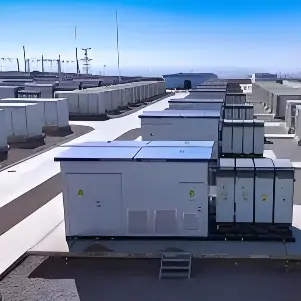 Angola Dadi Energy Storage 35 kV Power Quality Improvement success storyThe Angola Dadi Energy Storage power quality improvement project is a 35 kV power quality retrofit implemented on an existing energy storage plant. On-site nonlinear, high-harmonic loads such as inverters — power conversion systems (PCS) — are densely concentrated, a typical harmonic-source-intensive scenario in which harmonic pollution seriously hampers production efficiency and product quality.An H5+H7 filter compensation bank with a total capacity of 7500 kvar was provided to deliver harmonic
 -
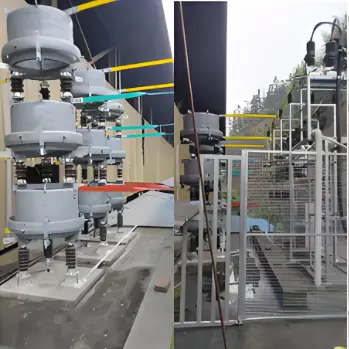 Jiangsu Suqian Rongxin Metal Products Power Quality Improvement Project-A success story in medium-frequency furnace harmonic mitigation and power quality improvementThe Jiangsu Suqian Rongxin Metal Products power quality improvement project is a dedicated retrofit addressing the severe harmonic pollution caused by the concentrated connection of nonlinear loads such as medium-frequency furnaces in the metal products industry. An H5+H7+H11 filter compensation bank with a total capacity of 17550 kvar was installed to deliver harmonic mitigation and reactive power compensation in one.Since commissioning, the dominant 5th, 7th and 11th characteristic harmonics h
 -
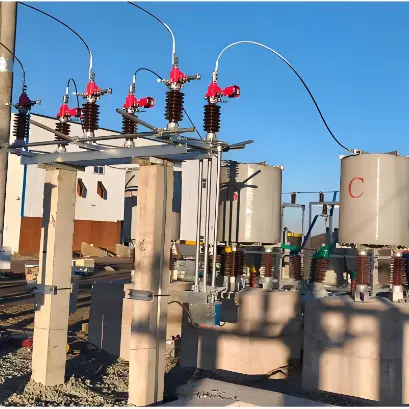 Mongolia South Gobi Coal Washing Plant 35 kV Power Quality Success StoryThe 35 kV power quality improvement project at a coal washing plant in South Gobi Province, Mongolia, is a dedicated retrofit addressing the severe harmonic pollution caused by the concentrated connection of variable-frequency-drive (VFD) equipment in the coal washing industry. A 5000 kvar H5 filter compensation bank was installed to deliver harmonic mitigation and reactive power compensation in one.Since commissioning, the dominant 5th harmonic has been effectively filtered, harmonic distortion