Decoding the Black Box-Wenzhou Tech Tackles the Invisible Wear of VCB Contacts
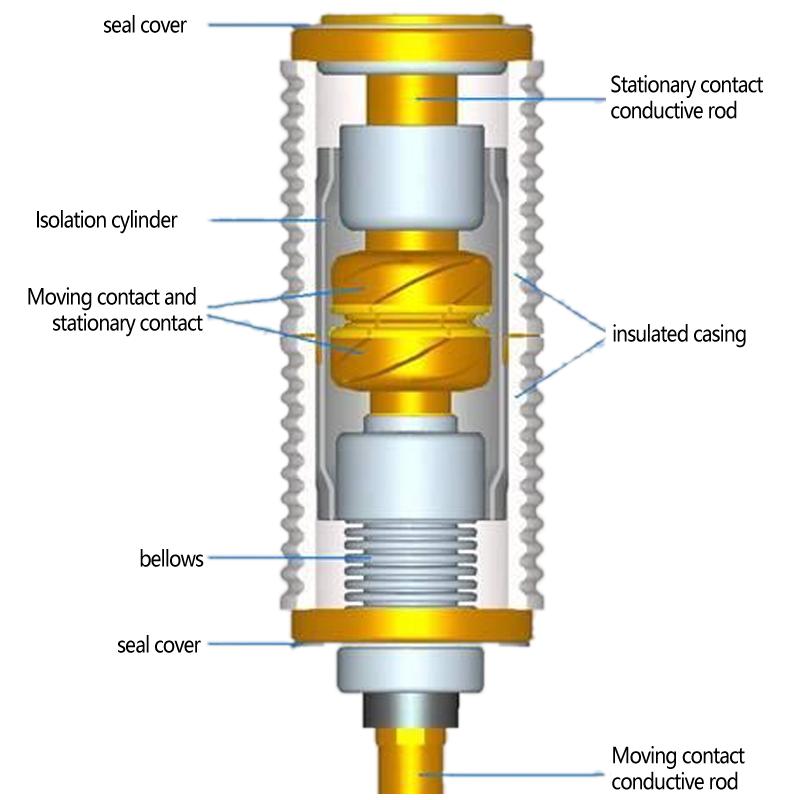
WENZHOU, China — May 6, 2025 — In the medium-voltage sector, Vacuum Circuit Breakers (VCBs) have become the silent sentinels of the grid, commanding over 80% of the market share. Yet, their greatest strength—being hermetically sealed and marketed as "maintenance-free"—is fast becoming a critical vulnerability. As the first massive wave of VCBs deployed in the early 2000s enters its "twilight years," the industry is facing a dangerous blind spot: the invisible electrical wear of contacts.
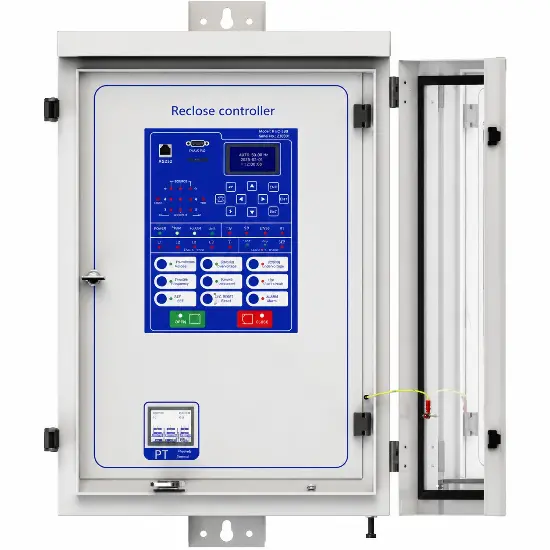
To bridge this gap, a Wenzhou-based power technology firm (hereinafter "the Company") has unveiled a proprietary Contact Electrical Wear Estimation Algorithm, transforming the "black box" of vacuum interrupters into a quantifiable, manageable asset.
The 25-Ohm Crisis: A Case for Quantification
The necessity of this technology was recently underscored by a catastrophic failure at a local industrial facility. A 250KW/6KV synchronous motor began exhibiting violent vibrations and severe current oscillations. While initial inspections focused on the motor’s air gap, the root cause remained hidden inside the VCB’s vacuum extinguishing chamber.
Diagnostic testing revealed that the C-phase contact resistance had surged to 25 ohms—a staggering deviation from the regulated standard of 50 micro-ohms (μΩμΩ).
"This isn't just a technical discrepancy; it’s a death sentence for equipment," noted a senior lead engineer involved in the analysis. "The high resistance triggered localized overheating, melting the contact surfaces and blocking the Archimedean spiral grooves designed for arc rotation. Left unchecked, the resulting three-phase imbalance would have led to a vacuum chamber explosion."
Quantifying the Invisible: The Algorithmic Logic
Because the contacts are sealed within a vacuum, physical inspection is impossible without destroying the interrupter. The Company’s new algorithm shifts the paradigm from "guessing" to "calculating" by focusing on Arc Energy (EE).
While the breaking current (II) can be captured via high-speed sampling chips, the actual arcing time is notoriously difficult to pinpoint in the field. The Company’s solution utilizes a cumulative energy model:
- Dynamic Accumulation: For every breaking event—whether a routine operation or a high-current fault—the controller calculates the specific electrical wear (arc energy) and adds it to a non-volatile memory.
- Predictive Alerting: Once the cumulative wear of any phase hits a pre-set threshold, the system triggers an immediate alarm. This notifies duty personnel to perform targeted checks on contact stroke, opening distance, and resistance before a failure occurs.
The Shift to Condition-Based Maintenance (CBM)
In Wenzhou, a global hub for electrical manufacturing, this breakthrough signals a broader shift toward Condition-Based Maintenance. By quantifying the invisible erosion caused by every arc, utilities can finally move away from rigid, calendar-based schedules that either waste resources or miss critical failures.
"We are essentially giving the VCB a 'voice' to tell us when it is tired," the Company stated. "In the era of smart grids, relying on luck is no longer an option. Prevention isn't just the best cure; it is the only way to ensure the resilience of the modern power system."