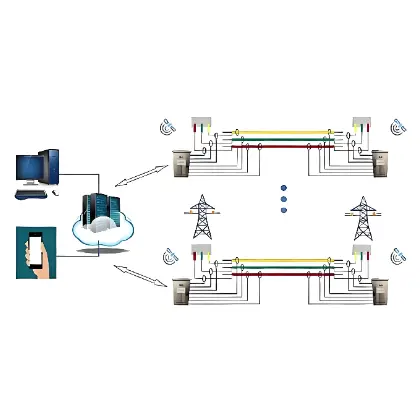
Communication-Free Feeder Automation: Recloser and Drop-Out Sectionalizer Coordination for Grids Without Communication Infrastructure
Target markets: Africa · Southeast Asia · South America · South Asia | Products: recloser + drop-out sectionalizer
Distribution Reliability Challenges in Communication-Constrained Networks
In Nigeria, a rural distribution feeder trips an average of 8 times per month [source to be confirmed]. Each outage — from the moment the substation protection operates until supply is restored — typically lasts 2 to 5 hours, and overnight outages and outages during the rainy season are routine.
When a fault occurs, maintenance crews must patrol overhead lines spanning tens of kilometers to locate the fault. Industry data consistently show that 70%–80% of overhead line faults are transient — caused by lightning flashover, tree contact, or wind-blown conductors that self-clear within seconds. This means the majority of outage events are triggered by faults that no longer exist by the time a crew arrives on site.
This document presents a communication-free, fully local feeder automation solution based on recloser and drop-out sectionalizer coordination. Without fiber, 4G, or SCADA infrastructure, the system automatically isolates the faulted section and restores supply to the healthy sections — in approximately 1–3 minutes — using on-device logic only.
Three Core Reliability Challenges
Challenge 1: Permanent Faults Cause Extended Full-Feeder Outages
A typical rural distribution feeder extends 30 to 80 km from the substation, with multiple branch taps. When the substation protection trips, the whole feeder is de-energized and the fault location is unknown. World Bank Enterprise Survey data show that the average outage duration per incident for businesses in sub-Saharan Africa is approximately 5 hours. In Burkina Faso, the median number of outages experienced by enterprises is approximately 8 per month (World Bank Enterprise Survey, year to be confirmed).
The annual outage burden on a single feeder translates directly into lost production and diesel-generator costs for customers, and into performance penalties for utilities that are regulated against SAIDI/SAIFI targets.
Challenge 2: Manual Fault Patrol Operating Cost Analysis
Tropical rainforest, mountainous terrain, and impassable rainy-season roads mean that every patrol requires a 2-to-3-person crew, a vehicle, and several hours of travel. The fully loaded cost of a single patrol is roughly USD 200–300 for a mid-sized utility. With ten to fifteen permanent faults per feeder per year, patrol costs alone consume thousands of dollars annually in operating expense — budget that could otherwise fund network upgrades or new connections.
Beyond the direct cost, experienced engineering and maintenance staff are diverted from network planning and improvement work to routine fault response.
Challenge 3: Infrastructure Compatibility Constraints for Centralized Automation
Centralized feeder automation (FA) — whether a centralized scheme or an intelligent distributed scheme — depends on three prerequisites: a reliable communication channel (fiber, 4G or private wireless), a SCADA master station and a trained operations team. In the markets where distribution automation is most urgently needed, one or more of these prerequisites is usually missing.
A more fundamental limitation: when communications are disrupted by flooding, theft or lightning damage, centralized automation systems lose functionality entirely. System reliability becomes dependent on communications infrastructure reliability.
For distribution networks without communication infrastructure, the engineering conclusion is clear: a communication-free, self-healing scheme based on local decision-making is the appropriate technical solution.
Solution Architecture and Operating Principle
Device Roles and Coordination Logic
This solution applies the widely used current-counting (pulse-counting) communication-free distribution automation logic, designed in accordance with IEC/IEEE 62271-111 / C37.60:2019 (recloser) and IEEE C37.63-2024 (drop-out sectionalizer).
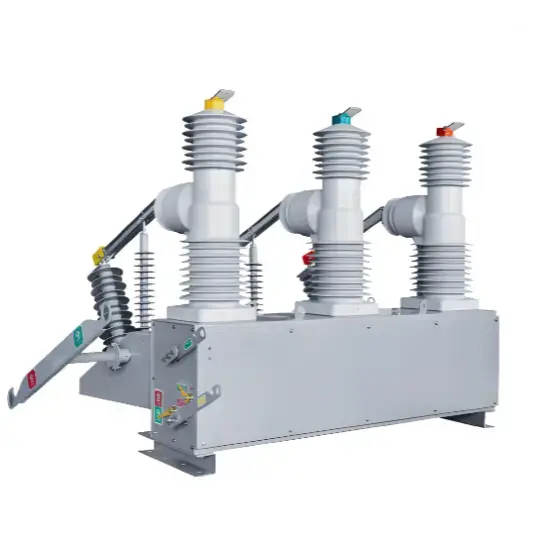
The recloser is installed at the feeder source (the substation outgoing position) or at a mid-feeder sectionalizing point. It detects overcurrent, interrupts fault current, and executes a programmable sequence of automatic reclosing operations. Its dead-time intervals create the de-energized windows required for downstream sectionalizer operation.
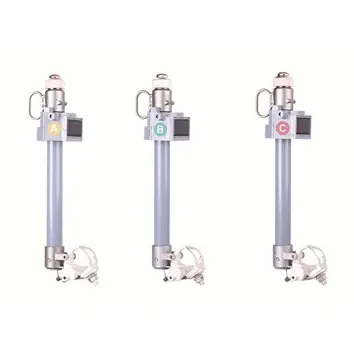
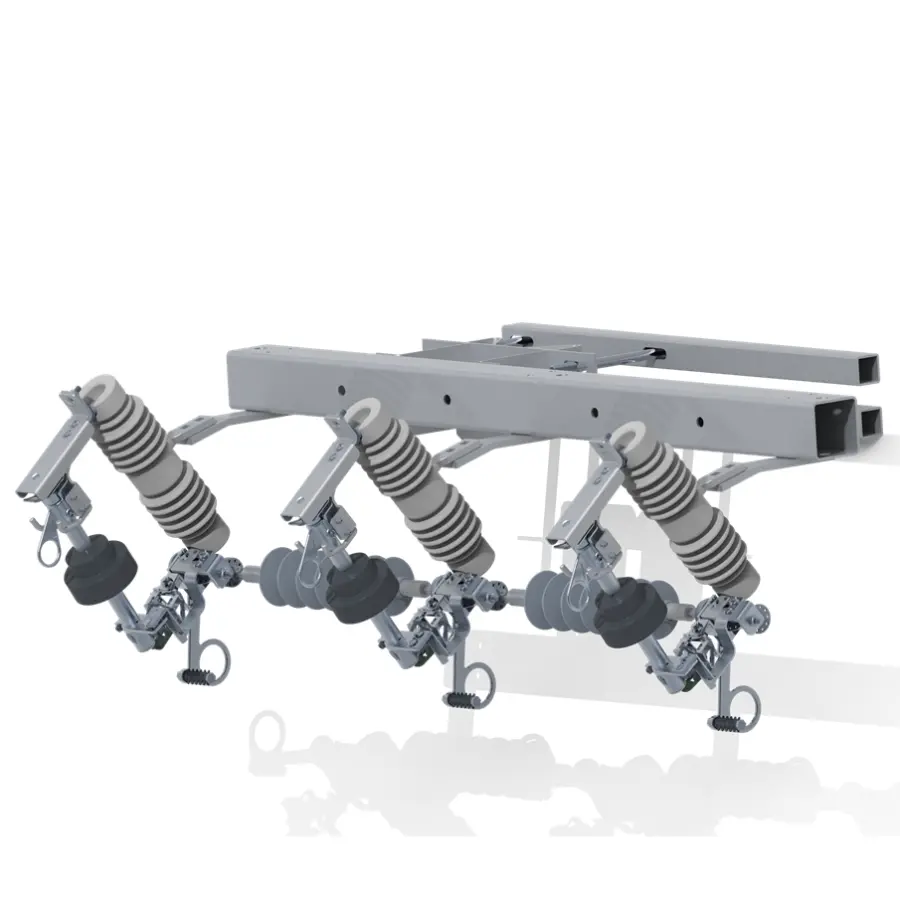
The drop-out (cutout-type) sectionalizer is installed at the head of each branch or zone boundary. It does not interrupt fault current — it counts overcurrent pulses and drops out, creating a visible break, during the dead-time interval provided by the upstream recloser. As described in IEEE C37.63-2024, a sectionalizer has no fault-current interrupting capability and opens only after the upstream device has de-energized the circuit. This design principle makes sectionalizers substantially less expensive than reclosers and enables multi-point branch protection under a single recloser at low marginal cost.
Coordination Sequence: Fault Isolated in Approximately 1–3 Minutes
Using a sectionalizer count setting of N = 2 (the most common field configuration), which leaves two operations of margin with a 1F + 3D recloser sequence:
|
Time |
Event |
System State |
|
t0 |
Permanent fault occurs (fallen tree, broken conductor) |
Feeder energized → fault |
|
t1 |
Recloser trips on its fast curve, enters dead-time interval |
Feeder momentarily de-energized; sectionalizer count = 1 |
|
t2 |
Dead time expires; recloser auto-recloses |
Fault current returns |
|
t3 |
Recloser trips on its delayed curve, enters second dead-time |
Feeder de-energized again; sectionalizer count = 2 = set value |
|
t4 |
During the dead time (circuit de-energized): the sectionalizer drops out, forming a visible break |
Faulted branch isolated |
|
t5 |
Recloser executes its second reclose |
No fault current; reclose successful — healthy sections restored |
The entire sequence is communication-free and fully automatic, and takes approximately 1–3 minutes.
Transient Fault Handling: Automatic Self-Clearing
Industry literature consistently show that 70%–80% of overhead line faults are transient in nature (sources: Siemens rural grid technical documentation; CMU Power Quality & Distributed Generation course materials — "over 80% of faults on overhead lines are temporary"; Illinois ICC System Reliability Report — "transient faults estimated ~80% of system disturbances").
- Without automation: substation protection trips → full feeder outage → 2–5 hour patrol → the crew arrives to confirm that the fault has self-cleared → trial energization. One transient fault becomes one full outage event.
- With this solution: the recloser trips on its fast curve → the dead time allows arc de-ionization and dielectric recovery → reclosing succeeds within seconds. The sectionalizer counts once but does not reach its set value and therefore does not operate. One transient fault causes only a brief voltage disturbance — no sustained outage, no crew dispatch.
This principle is also the technical basis for replacing fuse cutouts with drop-out sectionalizers. A fuse that is not coordinated with the recloser fast curve can melt on a transient overcurrent; the branch then remains out until a crew replaces the fuse, so a momentary event becomes a sustained outage. A sectionalizer counts without melting — transient overcurrent does not trigger isolation.
Product Specifications
Recloser
|
Parameter |
Specification |
|
Standard |
IEC/IEEE 62271-111 / C37.60:2019 |
|
Core function |
Overcurrent detection, fault current interruption, multiple automatic reclose operations |
|
Protection logic |
Fast (instantaneous) and delayed (time-overcurrent) curves; programmable operating sequence (e.g., 1F + 3D, 2F + 2D; F = fast operation, D = delayed operation) |
|
Control power |
Self-contained (VT-based or maintenance-free battery) |
|
Communication required |
None |
Fast/delayed curve coordination: the fast (instantaneous or short-time-delay) curve clears transient faults before downstream fuse cutouts melt — the fuse-saving principle. The delayed curve provides time-delayed operation so that downstream protective devices — lateral fuse cutouts and sectionalizers — can operate first.
Drop-Out Sectionalizer
|
Parameter |
Specification |
|
Standard |
IEEE C37.63-2024 |
|
Core function |
Overcurrent pulse counting → automatic drop-out during the dead-time (de-energized) interval |
|
Break type |
Visible break (drop-out type); manual reclosing (reset) required |
|
Fault current interruption |
Not required (opens only during the dead-time, de-energized interval) |
|
Count reset |
The counter resets automatically if the next pulse does not occur within the reset (memory) time — typically 10–90 s — which prevents operation on transient faults |
|
Communication required |
None |
Operational value of the visible break: after the sectionalizer drops out, crews can identify the faulted branch by visual inspection. The search area is immediately narrowed to the section downstream of the open device, typically reducing the patrol scope by 70% or more where the device is visible and accessible.
Voltage Level Flexibility: Adaptable to All Common MV Levels, Configured per Country
At the architecture level, this scheme is not tied to a single voltage class. Reclosers and drop-out sectionalizers can be specified for the actual medium-voltage (MV) level of your network.
Distribution voltage standards vary significantly across regions. We supply equipment specified for the MV distribution levels commonly used in our target markets:
|
Region / Country Examples |
Typical Distribution Voltage |
|
Anglophone Africa (Nigeria, Kenya, Tanzania, Ghana) |
11 kV, 33 kV |
|
Southeast Asia (Philippines, Indonesia, Malaysia) |
13.2/13.8 kV, 20 kV, 22 kV, 33 kV, 34.5 kV |
|
South America (Colombia, Peru, Bolivia, Ecuador) |
13.2 kV, 22 kV, 34.5 kV |
|
South Asia (India, Bangladesh, Sri Lanka) |
11 kV, 22 kV, 33 kV |
|
Francophone Africa (Côte d'Ivoire, Senegal, Cameroon) |
15 kV, 30 kV |
|
Other markets (e.g., Rwanda) |
Confirmed per project |
Customization note: if your project involves a voltage level that is not listed above (for example 25 kV or 36 kV), or a specific neutral earthing arrangement — isolated (unearthed) neutral, arc-suppression-coil (Petersen coil) earthing or resistance earthing — please specify these in your inquiry. We will provide coordination recommendations and equipment selection guidance for your system configuration.
Quantified Performance Indicators
|
Metric |
Reference Value |
Source / Basis |
|
Healthy-section restoration time |
~1–3 minutes |
Set by the recloser dead-time settings; achievable with standard configuration |
|
Share of overhead-line faults that are transient |
70%–80% |
Multi-source industry consensus (Siemens, CMU, Illinois ICC) |
|
SAIDI / SAIFI reduction |
40%–60% |
Case-study and simulation range [full citation to be confirmed] |
|
Fault patrol scope reduction |
Typically 70% or more |
Visible break limits the search to the section downstream of the last open device |
|
Per-fault impact area |
From full-feeder outage to single-branch outage |
Inversely related to the number of sectionalizers deployed |
|
Communication infrastructure cost |
Zero |
No fiber, no 4G, no SCADA master station required |
TCO comparison framework: A centralized SCADA-based feeder automation deployment typically requires USD 50,000–200,000 or more in communication infrastructure per feeder [source to be confirmed], depending on route length and whether the channel is owned or leased (fiber trenching, 4G modules, repeaters, master station licensing and ongoing telecom contracts). The local-logic scheme requires none of this. Across 10 feeders, the avoided communication-infrastructure cost can be comparable to, or larger than, the equipment investment.
Operating cost recovery model: Annual savings = (number of faults × fully loaded cost per patrol) − incremental equipment maintenance cost. Example: 12 permanent faults/year × USD 300/patrol = USD 3,600 per year of avoided patrol cost — typically the cost of one to two drop-out sectionalizers. Project payback depends on the total scheme cost (recloser + sectionalizers + installation) and on the value of the energy not supplied; it is calculated in the coordination study.
Typical Deployment Scenarios
Scenario A: Long-Radial Rural Feeders in Africa (Nigeria / Kenya / Tanzania)
Situation: single-radial feeders of 30–60 km with 10 or more branch taps, and frequent lightning and tree-fall faults. Nigeria's SAIDI is reported at approximately 110 hours per year [source to be confirmed: NERC quarterly performance report] — more than five times the 15–20 hours typical of well-performing utilities [source to be confirmed]. The Nigerian Electricity Regulatory Commission (NERC) includes SAIDI and SAIFI among the performance indicators applied to distribution companies (DisCos).
Deployment: one recloser at the feeder source and one drop-out sectionalizer (N = 2) at each major branch head.
Outcome: transient faults are cleared automatically, with no sustained outage. Permanent faults are confined to one branch, and the rest of the feeder is back in service in approximately 1–3 minutes. The visible break guides crews directly to the faulted branch, eliminating full-feeder patrol.
Scenario B: High-Lightning Mountain Areas — Southeast Asia / South America (Philippines / Indonesia / Colombia / Peru)
Situation: concentrated typhoon and thunderstorm seasons; mountain roads inaccessible during the rains; lightning-induced insulator flashover is the dominant fault type. During severe weather, reaching fault locations is not feasible. The Philippines has 121 electric cooperatives (ECs), many with limited budgets and technical capacity (National Electrification Administration); smart-grid penetration in rural networks remains low [figure to be confirmed].
Deployment: reclosers in sections with high lightning-flash density, plus drop-out sectionalizers on all branch lines; the recloser sequence is configured for multiple fast operations to maximize transient-fault self-clearing.
Outcome: Transient faults self-clear during storm events with no crew dispatch required. Permanent faults are pinpointed by visible breaks once roads reopen, significantly reducing total outage duration.
Scenario C: New Feeder Extensions Under Electrification Programs (India / Bangladesh / Rwanda)
Situation: under national electrification programs, new feeders are being extended rapidly, typically with only basic protection at the substation outlet. As load grows, fault impact expands. Regulatory pressure on SAIDI/SAIFI is increasing, but capital budgets for SCADA infrastructure are not available.
Solution value: design new feeders to a local-automation standard from the start — a recloser at the source plus sectionalizers on the branches — and avoid the cost of a later retrofit. The communication-free architecture can be replicated on any new feeder extension, making it one of the lowest-cost ways to achieve a measurable reliability improvement within the electrification budget.
Solution Selection: Local-Logic vs. Centralized Automation
Centralized SCADA-based automation provides greater observability and dispatch flexibility where communications, a master station and qualified operations staff are all in place. For distribution utilities in communication-constrained regions, however, deploying a centralized system requires:
- Fiber installation or private 4G network build-out: engineering timelines of several years [source to be confirmed] and substantial capital expenditure;
- SCADA master station commissioning and ongoing maintenance: data center, cybersecurity, and database administration costs;
- Continued dependence on communications availability: system functionality is lost when communications are interrupted.
Under the hard constraint of no communication infrastructure, local-logic feeder automation offers a favorable combination of low total cost of ownership (TCO), high inherent reliability, a short deployment timeline and modest maintenance skill requirements. Least life-cycle cost is one of the factors considered in project appraisal by multilateral development banks (World Bank, ADB); a project-specific assessment is still required.
Technical Advisory Service: Free Coordination Study
In feeder automation projects, the accuracy of the coordination study is as critical as the equipment selection. Two failure modes must be avoided. If the count is set too low, the sectionalizer can reach its setting and open a healthy branch. If the count is set too high — above the number of recloser operations to lockout minus one — the recloser reaches lockout while the sectionalizer is still closed, and the whole feeder stays out instead of only the faulted branch.
We offer a free recloser–sectionalizer coordination study for your specific feeder configuration.
Provide us with:
- Feeder single-line diagram (or a description of feeder structure)
- Line length, number of branches, transformer ratings
- Substation outlet protection type and parameters (if available)
- Your network voltage level and neutral earthing arrangement
We will deliver:
- Recloser operating sequence and fast/delayed curve coordination settings
- Verification of the sectionalizer count setting and coordination margin analysis
- Equipment selection recommendation (rated voltage, current, fault current rating)
- Notes on adaptation to your voltage level and earthing method
Data sources: World Bank Enterprise Surveys (sub-Saharan Africa; Burkina Faso); Siemens rural grid technical documentation; CMU Power Quality & Distributed Generation course materials; Illinois ICC System Reliability Report; National Electrification Administration (Philippines). Standards: IEC/IEEE 62271-111 / C37.60:2019; IEEE C37.63-2024.
Deployed Equipment
-
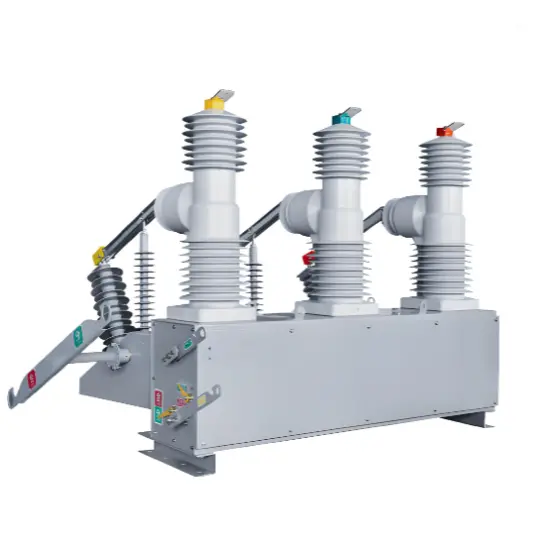 Outdoor Three-Phase High-Voltage Vacuum Circuit Breaker 40.5kVThe recloser is an outdoor high-voltage vacuum circuit breaker designed for 35kV/40.5kV medium-voltage overhead power distribution networks. It integrates a uniquely designed encapsulated pole and highly reliable operating mechanism, enabling it to safely make, carry, and break load currents, overload currents, and short-circuit currents. Engineered for long-term outdoor operation, this device delivers stable performance and minimal maintenance requirements, making it an ideal solution for moder
 -
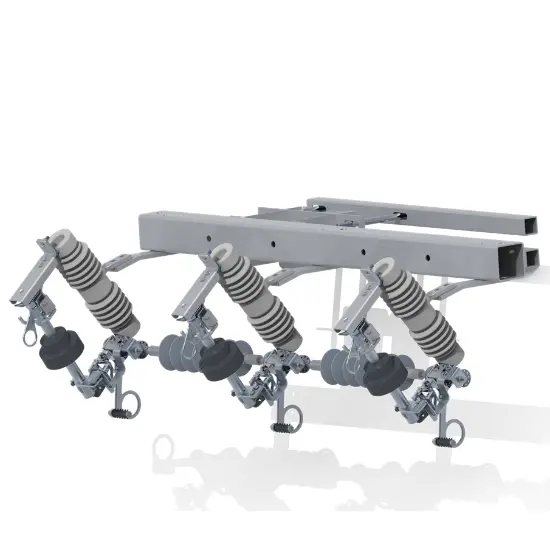 15kV Three‑Phase Mechanical‑Electronic SectionalizerIntroduction:The RDK-15/300, developed by Zhejiang Rockwill Electric Group for domestic and overseas 15 kV, 50/60 Hz distribution systems, coordinates with reclosers or autoreclosing breakers to confine outages to the faulted segment . Because it distinguishes transient from permanent faults by counting fault-current events, it acts only on permanent faults — transient faults reset automatically after the programmable memory time (30–300 s) (p.3). Because its electronic controller is powered by
 -
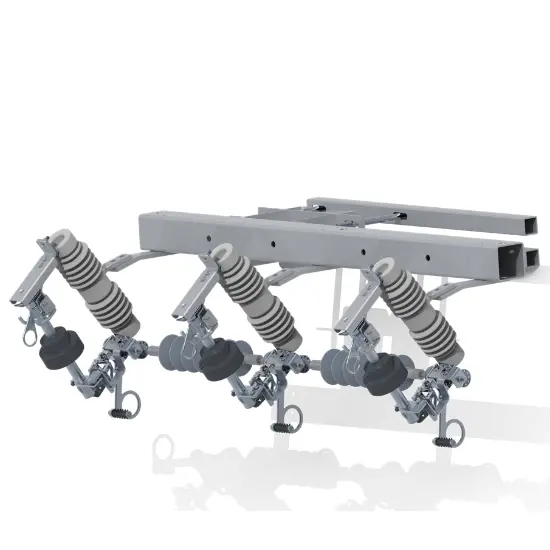 24kV Three‑Phase Mechanical‑Electronic SectionalizerIntroduction:The RDK-24/300, developed by Zhejiang Rockwell Energy for domestic and overseas 24 kV, 50/60 Hz distribution systems, coordinates with reclosers or autoreclosing breakers to confine outages to the faulted segment . Because it distinguishes transient from permanent faults by counting fault-current events, it acts only on permanent faults — transient faults reset automatically after the programmable memory time (30–300 s) (p.3). Because its electronic controller is powered by line-cu
 -
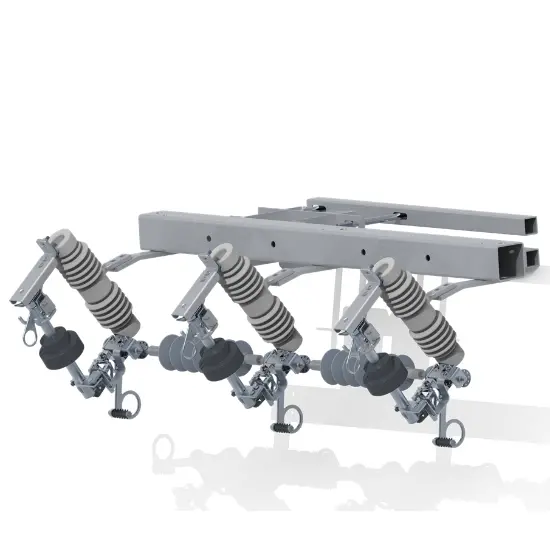 38kV Three‑Phase Mechanical‑Electronic SectionalizerIntroduction:The RDK-38/300, developed by Zhejiang RockwEll Energy for domestic and overseas 38 kV, 50/60 Hz distribution systems, coordinates with reclosers or autoreclosing breakers to confine outages to the faulted segment . Because it distinguishes transient from permanent faults by counting fault-current events, it acts only on permanent faults — transient faults reset automatically after the programmable memory time (30–300 s) (p.3). Because its electronic controller is powered by line-cu
Reference Projects
-
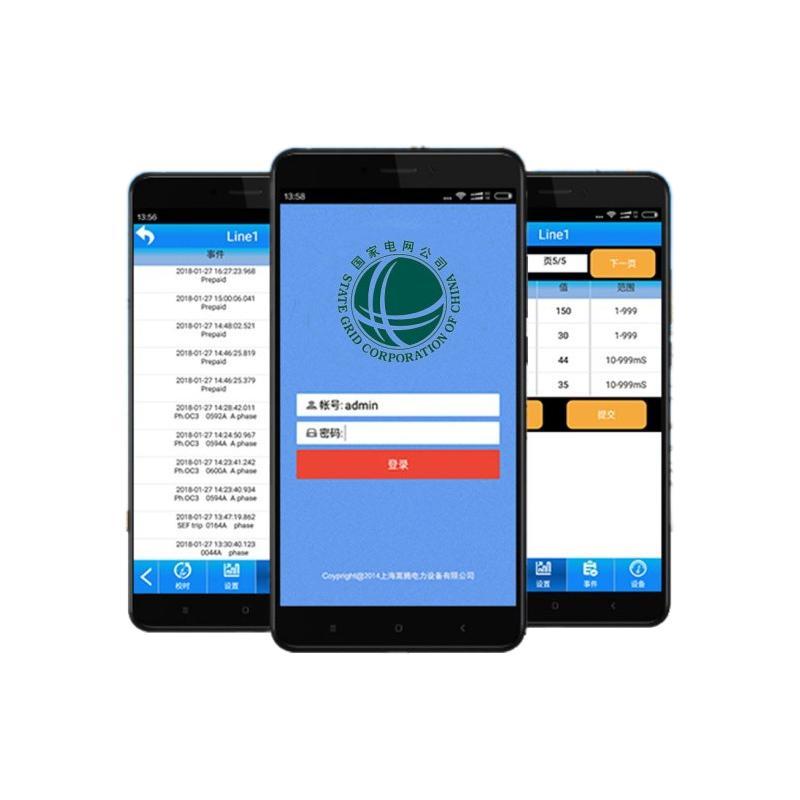 RW Energy Multi Country SMS Based Auto Recloser Controller Case StudyBreaking the communication bottlenecks in remote areas worldwide, this solution takes SMS communication as its core innovation and develops recloser controllers adaptable to multiple countries and diverse climates. Free from reliance on 4G networks, it enables rapid fault early warning and remote operation & maintenance management, helping various regions resolve distribution network operation challenges in remote areas and inject intelligent momentum into global rural power grid upgrading.0
 -
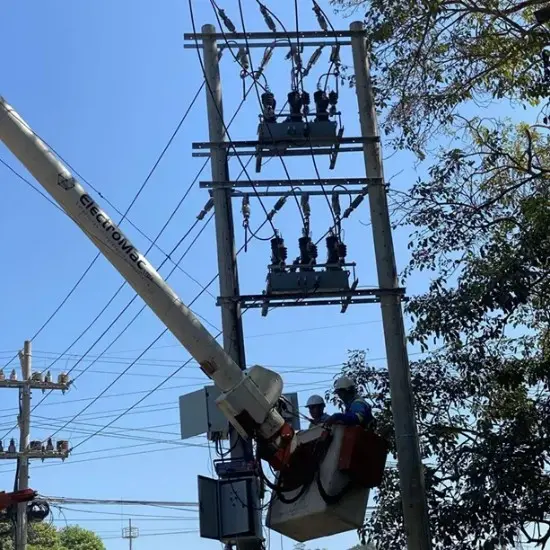 420 Units of 11 kV Automatic Reclosers for Dhaka Grid Upgrade01 General Overview: Dhaka 11 kV Distribution Grid Upgrade1.1 Project BackgroundBangladesh is currently undergoing a period of rapid economic and industrial development, and the growing demand for electricity has placed immense pressure on the local distribution networks. However, the country's existing 11 kV backbone distribution lines are facing severe equipment aging issues. The original switchgear suffers from serious mechanical wear, resulting in not only high failure rates but also sluggis
 -
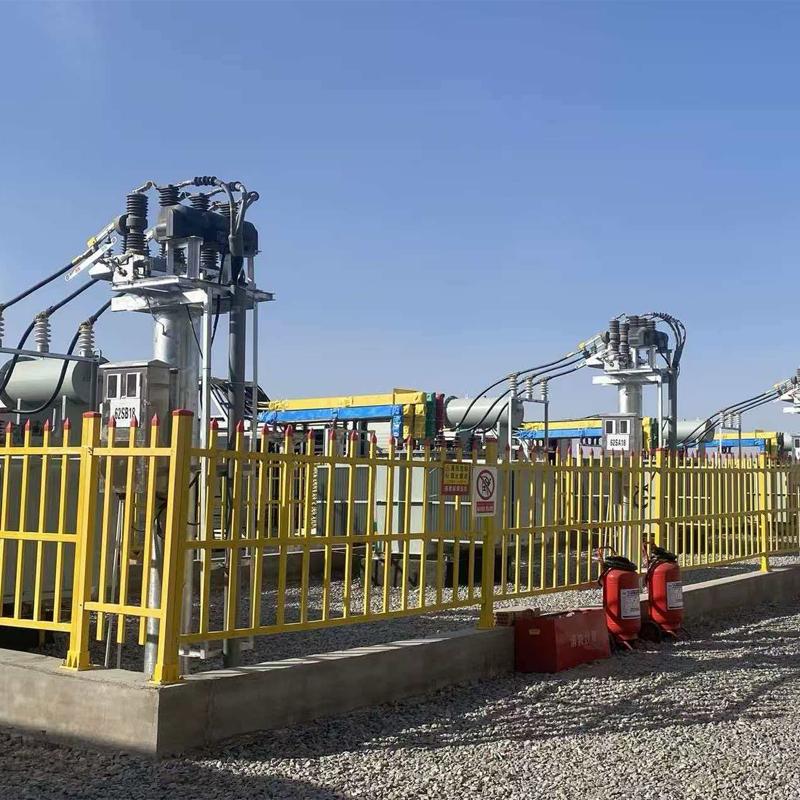 RW Energy Xinjiang Bazhou Large-scale Data Center 6 kV Industrial Grid Intelligent Power Distribution Upgrade Case StudyFocusing on the high-reliability power supply demands of data centers, this project upgrades the 6kV industrial intelligent power distribution system. It enhances anti-sandstorm and wide-temperature environmental adaptability, integrates rapid protection and remote intelligent operation and maintenance technologies, stably supports high-density computing loads, and empowers the intelligent transformation of power grids in western computing hubs.01 Project Overview1.1Project BackgroundBayingolin
 -
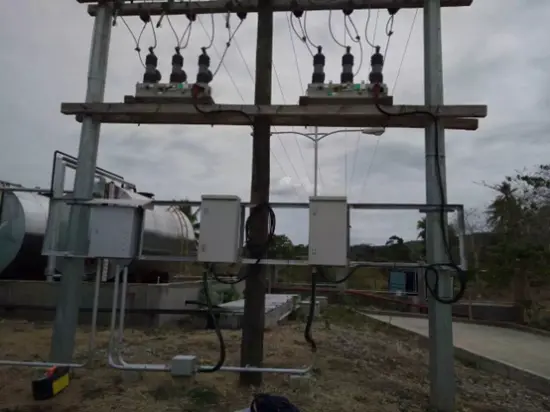 RW Energy Bangladesh 230 Units 11 kV Vacuum Circuit Breaker Intelligence Retrofit Case StudyFocusing on Bangladesh’s distribution network automation upgrade demands, the intelligent retrofitting of 230 sets of 11kV VCBs integrates intelligent control and anti-corrosion technologies. Adopting a cost-effective renewal model for legacy grids, it enables equipment reuse and efficiency improvement, advances regional distribution network digital transformation, and sets a benchmark for the intelligent upgrading of aging switchgear in South Asia.01 Project Overview1.1 Project BackgroundIn Dec
 -
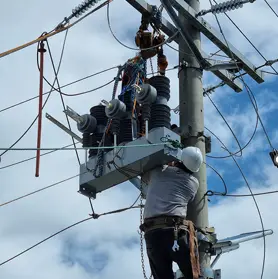 RW Energy Tanzania 325 Units 33 kV Auto Recloser Project Case StudyFocusing on the medium‑voltage distribution network upgrading demands in Tanzania, this solution adopts 325 sets of high‑reliability 33kV auto-reclosers integrated with FTU intelligent control and high environmental adaptability technologies to isolate faults and restore power supply rapidly, consolidating the stable foundation of regional power grids.01 Project Overview1.1 Project BackgroundIn 2025, 325 units of 33 kV auto reclosers were officially supplied and applied to the Tanzania medium-vo
 -
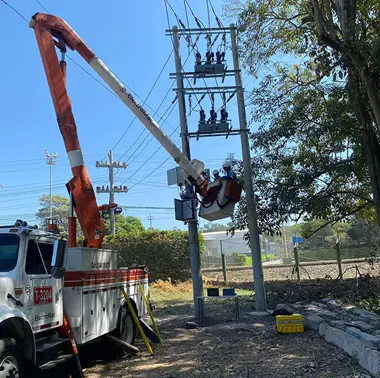 RW Energy Colombia PV Plant 35 kV Recloser Controller Project Case StudyFacing the frequency fluctuation and grid connection challenges of Colombia’s low-inertia photovoltaic power grid, this solution leverages customized recloser control and optimized frequency protection technologies to precisely adapt to the local 60Hz grid standard. It effectively addresses grid fluctuation issues under complex grid connection conditions, delivering a highly reliable and strong anti-interference grid protection solution for photovoltaic power plants and ensuring their stable and