Passive Harmonic Filter & Energy-Saving Compensation Device for Intermediate-Frequency Furnaces Solution
Product Overview
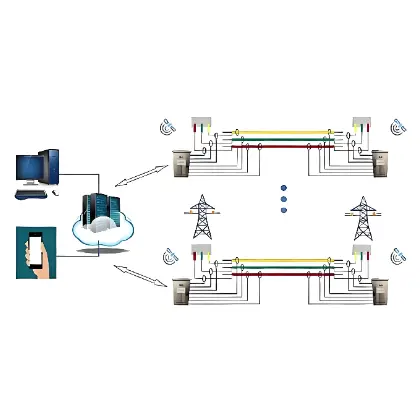
The RWFC-ZP series passive harmonic filter and reactive power compensation device is specially designed for intermediate-frequency (IF) furnace systems, which generate very high levels of harmonic currents. These harmonics deteriorate power quality, cause transformer overheating, voltage waveform distortion, cable insulation aging, increased losses, and unstable furnace operation.
To guarantee power quality, effective harmonic suppression and reactive power compensation are required. Based on national power quality standards and many years of field experience, this device uses wide-band filtering technology and dedicated tuned filter branches for the characteristic harmonics of IF furnaces. It absorbs harmonic currents, improves voltage quality, protects sensitive loads such as UPS systems, CNC machines, and inverters, and also shortens smelting time, bringing significant energy-saving benefits.
Characteristics of IF Furnace Loads
IF furnaces are strongly non-linear loads and inject large harmonic currents into the grid.
Harmonics distort the grid voltage waveform and affect other users and equipment.
The natural power factor of medium IF furnaces is typically 0.80–0.85; higher-power furnaces usually operate at 0.88–0.92 without compensation, but still with high reactive demand.
Main harmonic orders are 5th, 7th, and 11th.
Without proper filtering, these harmonics accelerate insulation aging, increase losses, and reduce system reliability.
Filtering Concept and Advantages
Wide-band tuned filters are configured according to the characteristic harmonics of the IF furnace (5th, 7th, 11th, etc.).
Harmonic currents are absorbed locally, so grid voltage THD remains within national limits.
Power factor is improved, normally to 0.90–0.99 depending on configuration.
The device eliminates harmonic-related failures of furnaces, UPS systems, CNC equipment, and other sensitive loads.
Shorter smelting time and lower energy consumption reduce production cost.
Filter Connection Schemes
High-voltage or low-voltage side filtering
The filter can be connected on the high-voltage side or low-voltage side of the furnace transformer, selected according to site conditions.
When harmonics are mainly on the low-voltage side, low-voltage filtering is recommended to minimize losses and avoid transformer overheating.
Single-transformer individual filtering
For IF furnaces equipped with dedicated transformers, each unit can use an independent filter system.
Simple and reliable control; dynamic switching follows the furnace load.
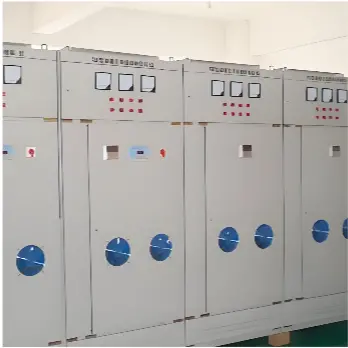
Low-voltage filter cabinets
Easy installation and maintenance.
Lower cost compared with high-voltage filtering solutions.
Environmental Conditions for Filter Equipment
Installation location: indoor
Maximum ambient temperature: +45 °C
Minimum ambient temperature: −15 °C
Maximum relative humidity: 95% (non-condensing)
Main Technical Data
Rated voltage: 400 V, 525 V, 660 V, 750 V, 1000 V
Rated capacity: 120–20,000 kVAR
Harmonic attenuation: not lower than the values required by national standards
Power factor after compensation: 0.90–0.99
Rated impedance ratio (reactor to capacitor): 1:1
Product Features
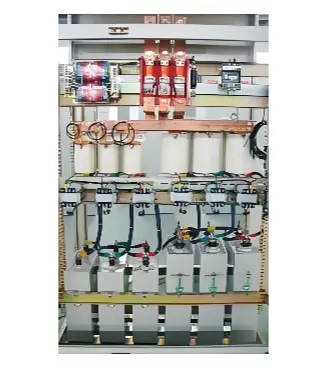
Indoor metal cabinet structure; main components include contactors (or switching devices), reactors, capacitors, fuses, discharge resistors, measuring instruments, and protective relays.
The system is designed based on actual site data to ensure targeted harmonic suppression and reactive compensation.
High safety: clearances, creepage distances, and thermal design fully consider IF furnace environments with dust, metal particles, and high temperature.
Automatic control adjusts the number of capacitor steps according to real-time load, keeping the power factor within the preset range.
After power restoration, compensation is resumed within about 5 seconds; reactive deviation is kept within ±10% of rated reactive power.
Modular cabinet design makes installation and maintenance convenient; special circuit layout ensures that any individual component failure does not affect the whole system.
Automatic mode: dedicated switching device for unattended operation.
Manual mode: main breaker with step switches to meet specific process requirements.
Applicable Standards
Design, manufacturing, testing, and inspection comply with (or refer to) the following standards:
Power Quality: Harmonics in Public Power Systems
Power Quality: Voltage Deviation
Technical Code for High-Voltage Shunt Capacitor Installations
Power Reactors
Low Voltage Reactive Power Compensation Equipment
Other related national and industry standards for power quality and reactive compensation