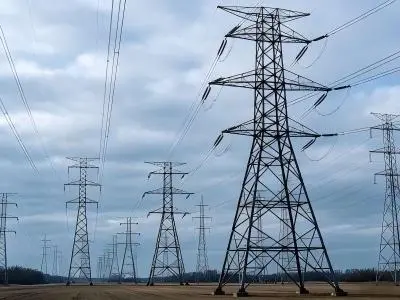
Distribution Automation — The Evolution from Reactive Repair to Active Self-Healing Smart Grids
1. Industry Challenge: The "Physical Blind Spots" of Traditional Distribution Networks
1.1 The "Manual Search" Era of Fault Location
In traditional distribution networks, when a 10kV feeder trips, maintenance crews must patrol kilometers of line pole-by-pole to visually locate the fault point. This outdated operational model directly results in three critical consequences:
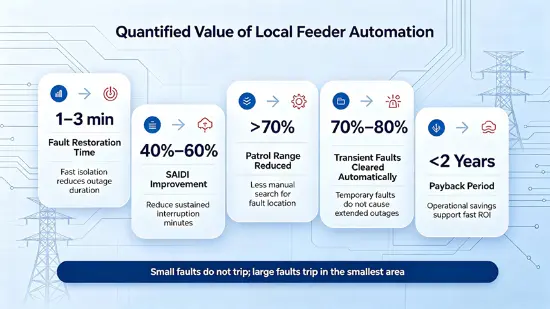
- Degraded SAIDI Metrics: Average outage durations typically exceed 120 minutes.
- Wildfire Risk: High-impedance ground faults (e.g., a conductor falling onto dry grass) produce small currents typically below 5A. Traditional overcurrent protection (50/51) cannot identify these faults, and the sustained arc can ignite vegetation within 1.5 seconds.
- Electrocution Hazards: A fallen conductor, if not cleared promptly, poses a lethal threat to anyone in the vicinity.
1.2 Why Can't Traditional Protection "See" These Faults?
Traditional substation feeder protection acts like a "Heavyweight Boxer" — its job is to intercept massive short circuits of thousands of amperes. For micro-leakage currents as low as 100mA to 2A generated by high-impedance grounding, it typically treats them as "normal fluctuations" and refuses to trip. This physical blind spot is the root cause of many distribution network accidents.
2. Core Technology: The "Trinity" Logic Engine of Distribution Automation
Distribution Automation (DA) fundamentally means upgrading the grid from "passively enduring faults" to "actively sensing, instantly isolating, and automatically restoring" — a self-healing ecosystem. Its core rests on the following three physical pillars:
2.1 Intelligent Terminal Layer: Equipping the Grid with "Digital Senses"
The physical foundation of DA is the intelligent primary equipment installed on poles.
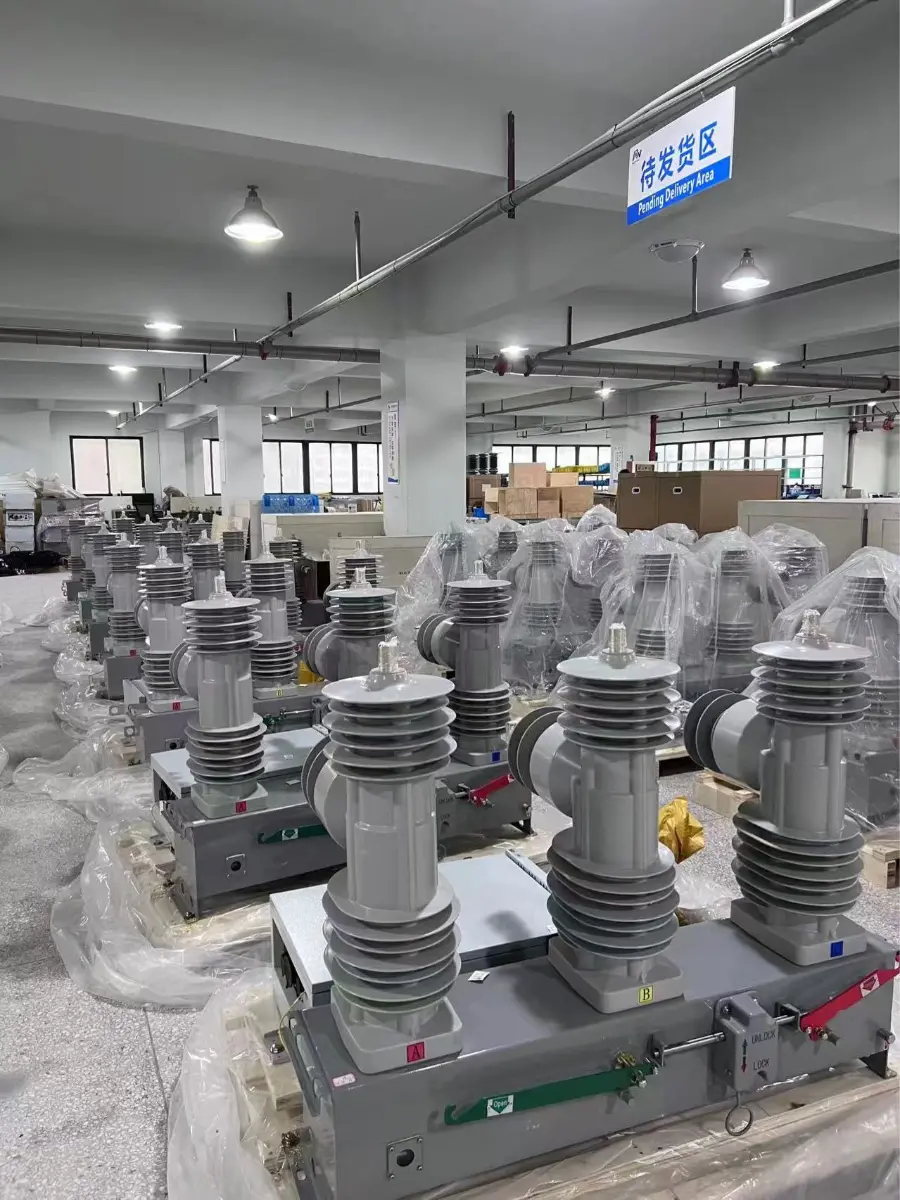
① Smart Recloser:
- Physical Logic: Features automatic reclosing sequences of O-0.3s-CO-15s-CO-15s-CO.
- Self-Healing Value: Physically distinguishes transient faults (e.g., tree branch contact, accounting for 90% of all faults) from permanent ones. Transient faults are restored instantly via auto-reclose; permanent faults trigger a Lockout, physically blocking a secondary shock to expensive transformers.
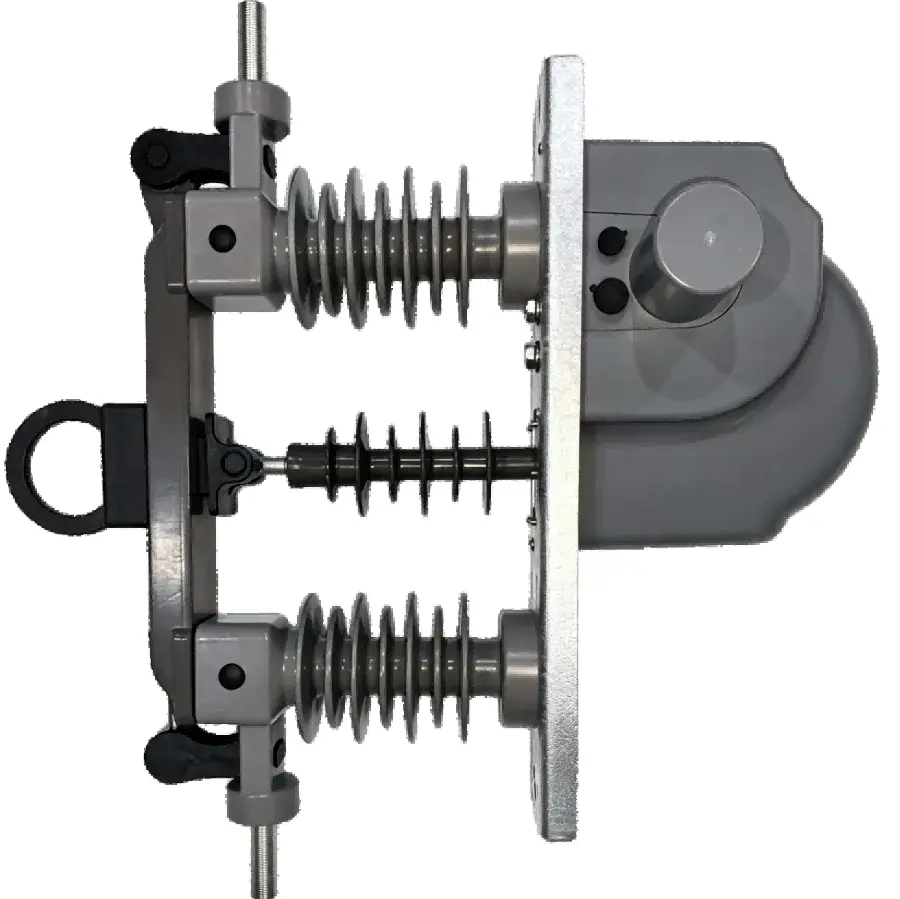
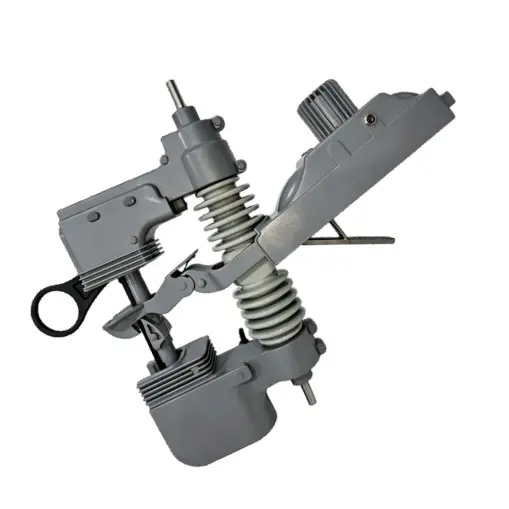
② Smart Disconnector:
- Physical Logic: Provides a visible break via a positively driven rigid-link kinematic chain, ensuring absolute maintenance safety.
- Digital Value: Supports ground-level remote control, completely eliminating pole-climbing operations. Status signals are transmitted in real-time to SCADA via IEC 60870-5-104
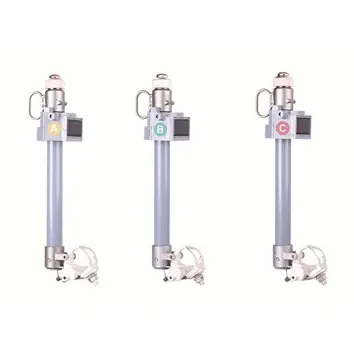
③ Smart Drop-out Fuse:
- Physical Logic: Integrates high-precision tilt sensors and NB-IoT/LoRa communication modules.
- Perception Value: Sends a precise GPS coordinate alarm within 1 second of a physical dropout, reducing fault location time from hours to seconds.
2.2 Communication Layer: Implementing the "Neural Pathways"
Data captured by intelligent terminals must be reliably transmitted to the master station, as specified by standard SCADA protocols.
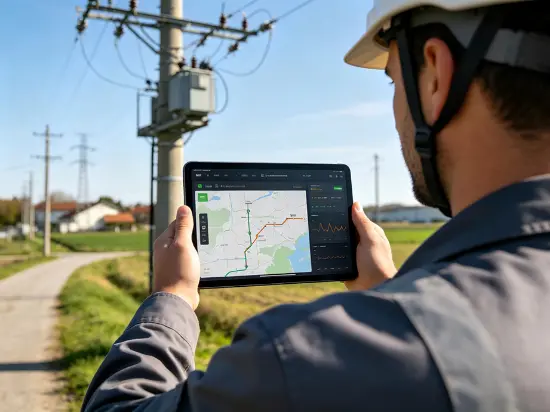
2.3 Master Station Decision Layer: FDIR Logic — The "Self-Healing Brain"
FDIR (Fault Detection, Isolation, and Restoration) is the soul of the entire automation system.
- Fault Detection: Intelligent terminals (such as reclosers) instantly identify high-impedance faults (SEF) using zero-sequence transient signature analysis.
- Fault Isolation: The master station or peer-to-peer logic automatically commands the reclosers on both sides of the fault to open, physically confining the outage to the smallest possible section.
- Automatic Restoration: The system automatically closes the tie recloser, restoring power to non-faulted segments within 60 seconds via physical route reconfiguration.
3. Core Application Scenarios: The Three Defensive Battles of Smart Grids
3.1 Wildfire Defense: 100mA Sensitivity High-Impedance Fault Protection (SEF)
- [Physical Hazard]: A 2A micro-arc from a downed conductor is sufficient to ignite dry grass.
- [Technical Solution]: The recloser controller achieves 100mA primary current sampling precision via high-permeability zero-sequence CTs.
- [Physical Proof]: Per IEEE C37.230, the controller identifies the unique non-linear arc chaos signature of high-impedance faults and issues a trip within 0.5 seconds, reducing grid-triggered wildfire probability by 95%.
3.2 Renewable Energy Integration: Tackling the Challenge of Bidirectional Power Flow
- [Physical Hazard]: With Distributed Photovoltaic (PV) generation connected, fault current direction is no longer unidirectional; traditional protection schemes can easily mal-operate.
- [Technical Solution]: The controller activates Directional Power Sensing logic, physically distinguishing an "upstream fault" from "DER back-feed" by comparing voltage and current phase angles.
3.3 Urban Distribution: Enhancing Supply Reliability (SAIDI)
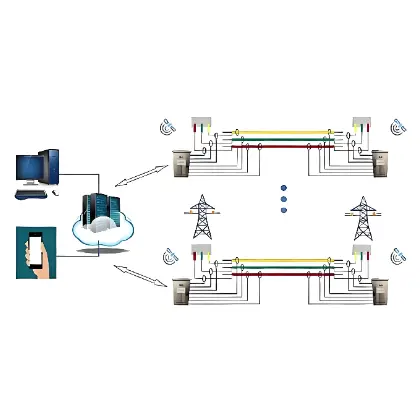
- [Synergy Value]: Smart Disconnectors, Smart Fuses, and Smart Reclosers form a "Terminal-Edge-Cloud" collaborative system. Fuses provide second-level alarming, reclosers handle instantaneous isolation, and disconnectors guarantee safe maintenance.
- [Quantified Benefit]: A comprehensive DA solution reduces SAIDI by over 70%, upgrading inspection labor time from "hours" to "minutes".
4. Global Market Access: International Standards for Distribution Automation
5. Conclusion: The Physical Value Loop of Distribution Automation
"Standards determine life and death; intelligence determines market class."
Distribution Automation is not merely a stack of technologies; it is a system-level defensive strategy grounded in physical causal proof. It fundamentally shifts a utility's operational model from "reactive repair" to "active defense," serving as the strongest cornerstone for ensuring personnel safety, environmental security, and power supply reliability.
Deployed Equipment
-
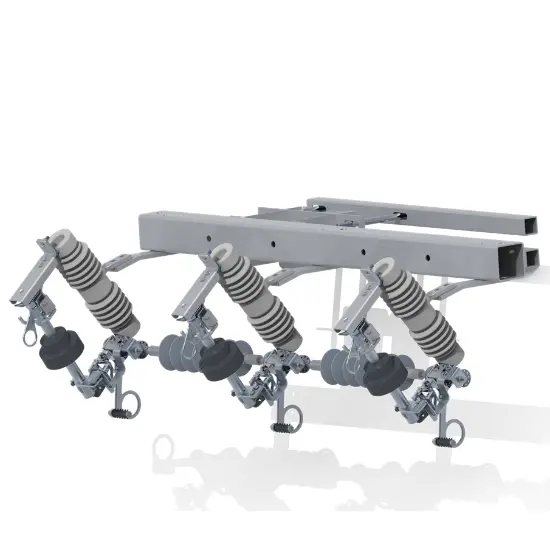 15kV Three‑Phase Mechanical‑Electronic SectionalizerIntroduction:The RDK-15/300, developed by Zhejiang Rockwill Electric Group for domestic and overseas 15 kV, 50/60 Hz distribution systems, coordinates with reclosers or autoreclosing breakers to confine outages to the faulted segment . Because it distinguishes transient from permanent faults by counting fault-current events, it acts only on permanent faults — transient faults reset automatically after the programmable memory time (30–300 s) (p.3). Because its electronic controller is powered b
 -
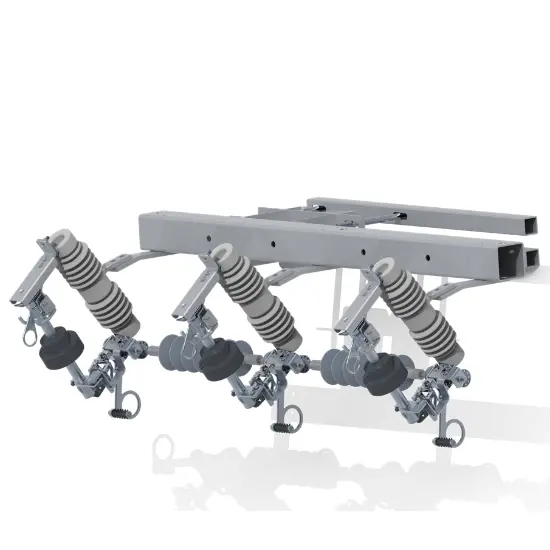 24kV Three‑Phase Mechanical‑Electronic SectionalizerIntroduction:The RDK-24/300, developed by Zhejiang Rockwell Energy for domestic and overseas 24 kV, 50/60 Hz distribution systems, coordinates with reclosers or autoreclosing breakers to confine outages to the faulted segment . Because it distinguishes transient from permanent faults by counting fault-current events, it acts only on permanent faults — transient faults reset automatically after the programmable memory time (30–300 s) (p.3). Because its electronic controller is powered by line-c
 -
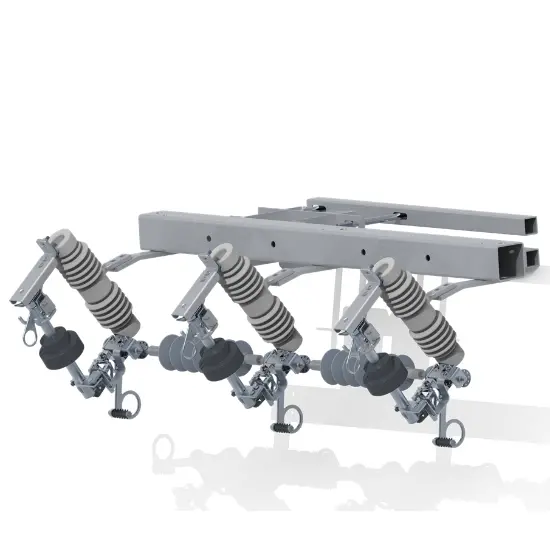 38kV Three‑Phase Mechanical‑Electronic SectionalizerIntroduction:The RDK-38/300, developed by Zhejiang Rockwell Energy for domestic and overseas 38 kV, 50/60 Hz distribution systems, coordinates with reclosers or autoreclosing breakers to confine outages to the faulted segment . Because it distinguishes transient from permanent faults by counting fault-current events, it acts only on permanent faults — transient faults reset automatically after the programmable memory time (30–300 s) (p.3). Because its electronic controller is powered by line-cur
 -
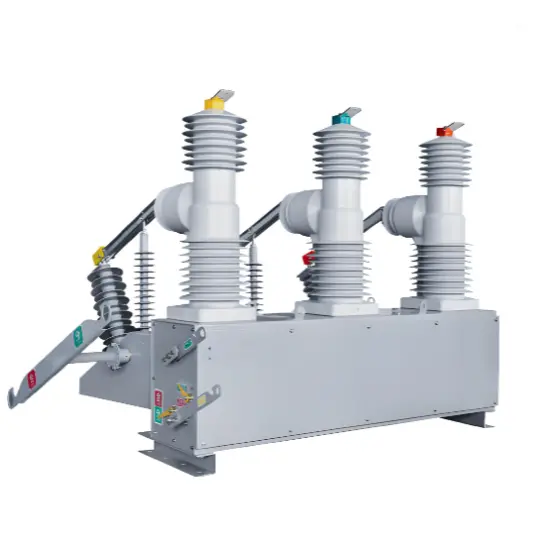 Outdoor Three-Phase High-Voltage Vacuum Circuit Breaker 40.5kVThe recloser is an outdoor high-voltage vacuum circuit breaker designed for 35kV/40.5kV medium-voltage overhead power distribution networks. It integrates a uniquely designed encapsulated pole and highly reliable operating mechanism, enabling it to safely make, carry, and break load currents, overload currents, and short-circuit currents. Engineered for long-term outdoor operation, this device delivers stable performance and minimal maintenance requirements, making it an ideal solution for moder
Reference Projects
-
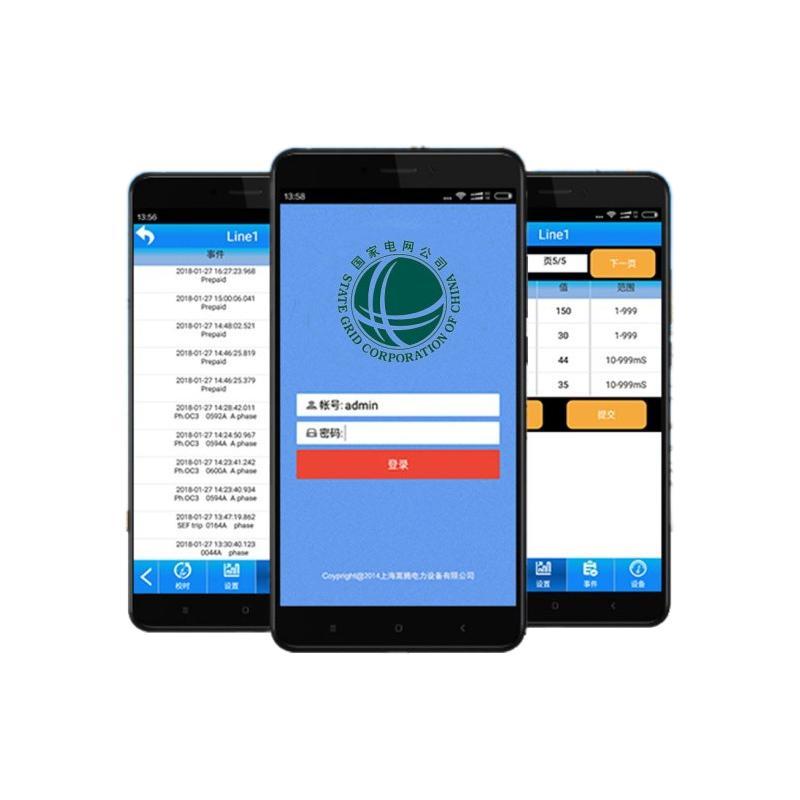 RW Energy Multi Country SMS Based Auto Recloser Controller Case StudyBreaking the communication bottlenecks in remote areas worldwide, this solution takes SMS communication as its core innovation and develops recloser controllers adaptable to multiple countries and diverse climates. Free from reliance on 4G networks, it enables rapid fault early warning and remote operation & maintenance management, helping various regions resolve distribution network operation challenges in remote areas and inject intelligent momentum into global rural power grid upgrading.0
 -
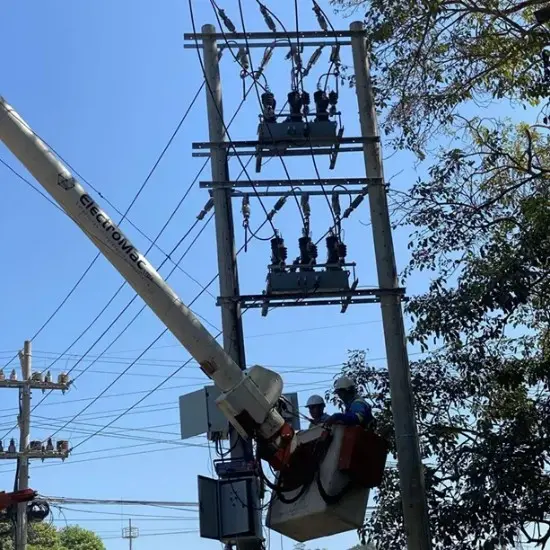 420 Units of 11 kV Automatic Reclosers for Dhaka Grid Upgrade01 General Overview: Dhaka 11 kV Distribution Grid Upgrade1.1 Project BackgroundBangladesh is currently undergoing a period of rapid economic and industrial development, and the growing demand for electricity has placed immense pressure on the local distribution networks. However, the country's existing 11 kV backbone distribution lines are facing severe equipment aging issues. The original switchgear suffers from serious mechanical wear, resulting in not only high failure rates but also sluggis
 -
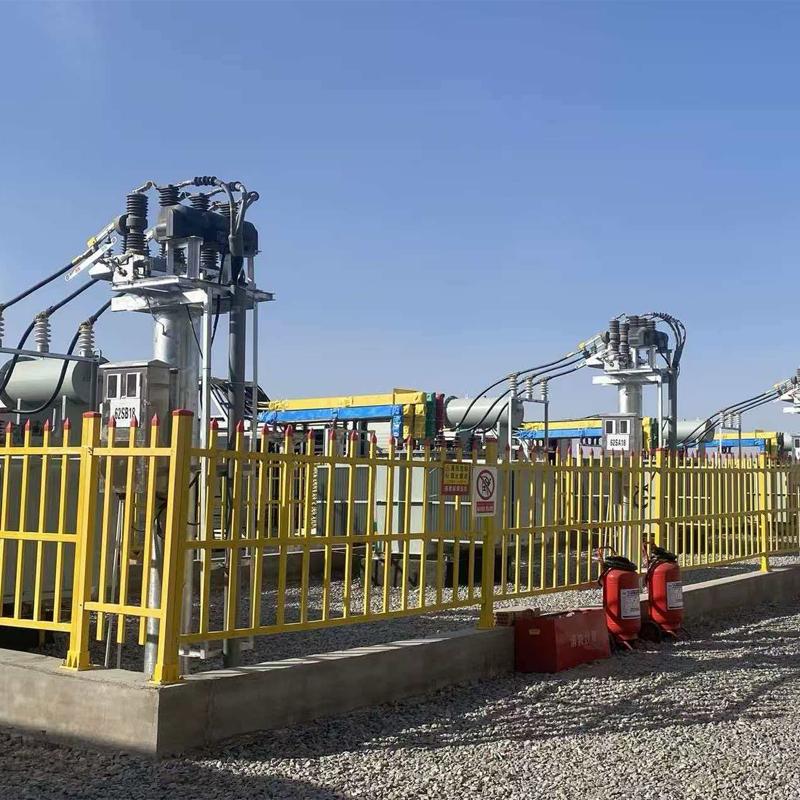 RW Energy Xinjiang Bazhou Large-scale Data Center 6 kV Industrial Grid Intelligent Power Distribution Upgrade Case StudyFocusing on the high-reliability power supply demands of data centers, this project upgrades the 6kV industrial intelligent power distribution system. It enhances anti-sandstorm and wide-temperature environmental adaptability, integrates rapid protection and remote intelligent operation and maintenance technologies, stably supports high-density computing loads, and empowers the intelligent transformation of power grids in western computing hubs.01 Project Overview1.1Project BackgroundBayingolin
 -
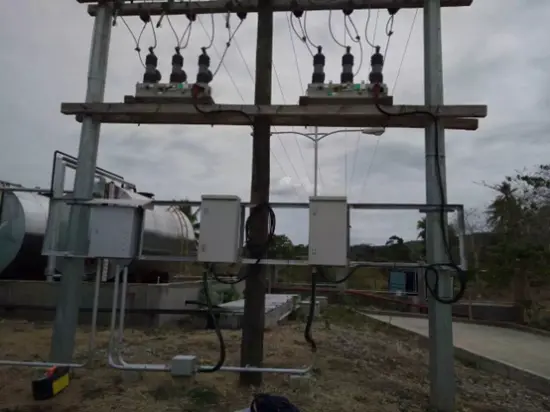 RW Energy Bangladesh 230 Units 11 kV Vacuum Circuit Breaker Intelligence Retrofit Case StudyFocusing on Bangladesh’s distribution network automation upgrade demands, the intelligent retrofitting of 230 sets of 11kV VCBs integrates intelligent control and anti-corrosion technologies. Adopting a cost-effective renewal model for legacy grids, it enables equipment reuse and efficiency improvement, advances regional distribution network digital transformation, and sets a benchmark for the intelligent upgrading of aging switchgear in South Asia.01 Project Overview1.1 Project BackgroundIn Dec
 -
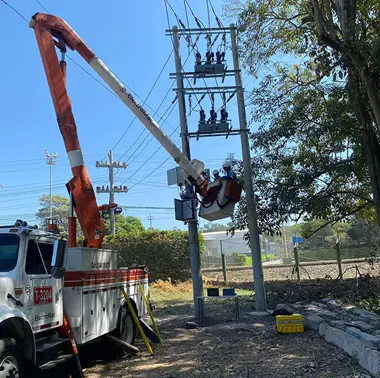 RW Energy Colombia PV Plant 35 kV Recloser Controller Project Case StudyFacing the frequency fluctuation and grid connection challenges of Colombia’s low-inertia photovoltaic power grid, this solution leverages customized recloser control and optimized frequency protection technologies to precisely adapt to the local 60Hz grid standard. It effectively addresses grid fluctuation issues under complex grid connection conditions, delivering a highly reliable and strong anti-interference grid protection solution for photovoltaic power plants and ensuring their stable and
 -
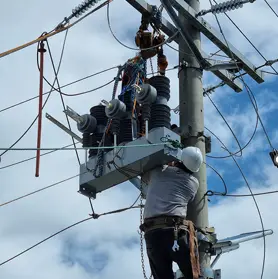 RW Energy Tanzania 325 Units 33 kV Auto Recloser Project Case StudyFocusing on the medium‑voltage distribution network upgrading demands in Tanzania, this solution adopts 325 sets of high‑reliability 33kV auto-reclosers integrated with FTU intelligent control and high environmental adaptability technologies to isolate faults and restore power supply rapidly, consolidating the stable foundation of regional power grids.01 Project Overview1.1 Project BackgroundIn 2025, 325 units of 33 kV auto reclosers were officially supplied and applied to the Tanzania medium-vo