Recloser Controllers Communication Upgrade: Enhanced Protocol Compatibility and Stability for Faster Grid
As distribution grid automation matures, recloser controllers must "communicate" seamlessly with master stations, FTU terminals, and ring main units (RMUs) to quickly isolate faults and restore power automatically. However, many legacy controllers suffer from "communication barriers" or "unstable connections," hindering grid automation. Based on a real-world county-level grid case, we have developed this communication upgrade solution to eliminate these hurdles.
I. Pain Points: Protocol Incompatibility Costing $12,000+ Annually in O&M
Core Issues The communication weaknesses of recloser controllers primarily involve two points that directly impact grid stability:
Protocol Incompatibility: Some controllers do not support industry-standard protocols like IEC 61850, making them "speak a different language" than master stations and FTUs. This prevents data transmission and collaborative operation.
Single Communication Mode: Relying on only one transmission method in remote or complex rural areas leads to weak signals or line failures. This results in frequent disconnections and data loss, making remote O&M and coordinated control impossible.
Real-World Case A county upgrading its 10kV grid installed 18 recloser controllers but faced immediate failure: The units lacked IEC 61850 support and could not communicate with the existing master station or FTUs. As a result, the grid's "self-healing" function could not be implemented. Furthermore, 8 units in remote areas relied solely on wired connections; due to poor local conditions, communication was paralyzed. Maintenance crews had to travel on-site for every minor issue, racking up over 80,000 RMB ($12,000+) in extra annual O&M costs.
II. Four-Dimensional Solution: "Compatible, Stable, and Secure"
To address compatibility and instability, we upgraded the controllers across four key areas to fit all 10-35kV grid scenarios.
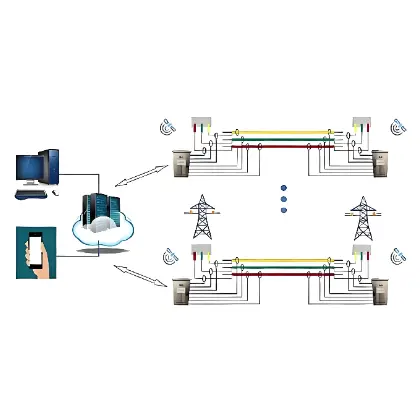
Multi-Protocol Compatibility: By pre-installing IEC 61850, Modbus, and other mainstream protocols, the controller acts as a "polyglot translator." It can now interact smoothly with any manufacturer's master station or RMU, keeping pace with grid digitization.
Dual-Mode Redundant Communication: We implemented a "Wired + Wireless" dual-insurance scheme:
Wired (Ethernet/RS485): Used for short distances and high-interference environments to ensure stability.
Wireless (4G/5G/LoRa): Used for remote rural areas to transmit data without the need for extensive cabling.
Security Hardening: We added communication encryption modules to "lock" all transmitted data, preventing leaks or tampering. Additionally, we optimized circuits with filtering and lightning protection to ensure zero data loss during storms or electromagnetic interference.
Real-Time Status Monitoring: Controllers now automatically record signal strength and transmission quality, uploading data to a cloud platform. If a disconnection occurs, the platform sends an immediate alert, allowing O&M teams to resolve issues before they escalate.
III. Proven Results: Full Compatibility, Zero Disconnection, High Savings
Following the upgrade in the aforementioned county:
100% Compatibility: All 18 controllers now support IEC 61850, allowing the "self-healing" function to go live.
Zero Downtime: Remote rural units switched to wireless, restoring all monitoring functions.
Cost Efficiency: Annual O&M costs were slashed by 80,000 RMB, and grid self-healing capabilities were significantly enhanced.
IV. Triple Protection: Reliability and Peace of Mind
Technical Support: We provide end-to-end support—from protocol selection to on-site commissioning—ensuring perfect synergy with all grid equipment.
Quality Assurance: Each module undergoes specialized compatibility testing. Every unit passes a full-flow communication test before leaving the factory.
After-Sales Service: We offer a 1-year warranty and lifelong maintenance. We also provide specialized training to ensure O&M teams can manage and debug communication settings effectively.
Deployed Equipment
-
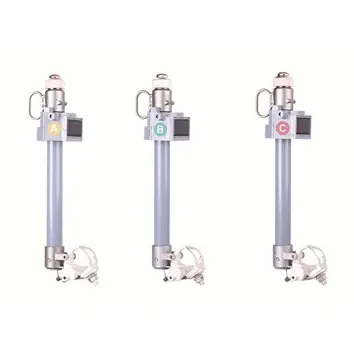
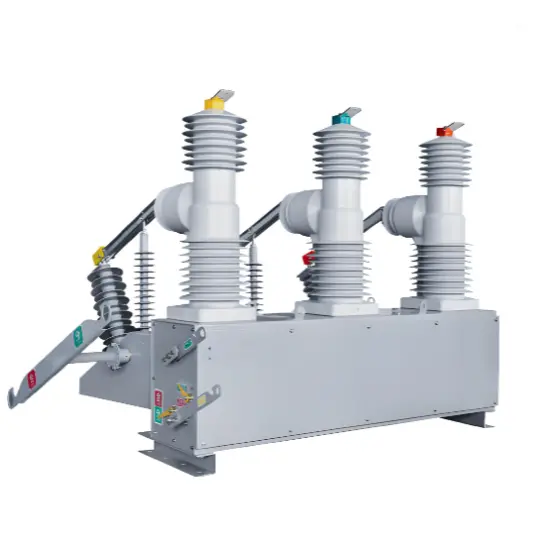 Outdoor Three-Phase High-Voltage Vacuum Circuit Breaker 40.5kVThe recloser is an outdoor high-voltage vacuum circuit breaker designed for 35kV/40.5kV medium-voltage overhead power distribution networks. It integrates a uniquely designed encapsulated pole and highly reliable operating mechanism, enabling it to safely make, carry, and break load currents, overload currents, and short-circuit currents. Engineered for long-term outdoor operation, this device delivers stable performance and minimal maintenance requirements, making it an ideal solution for moder
Reference Projects
-
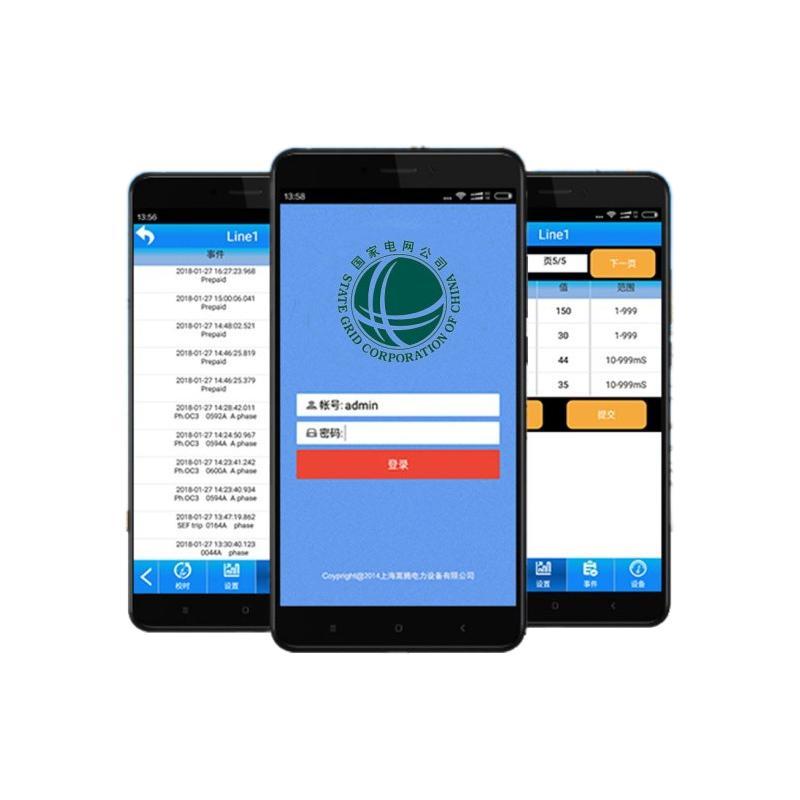 RW Energy Multi Country SMS Based Auto Recloser Controller Case StudyBreaking the communication bottlenecks in remote areas worldwide, this solution takes SMS communication as its core innovation and develops recloser controllers adaptable to multiple countries and diverse climates. Free from reliance on 4G networks, it enables rapid fault early warning and remote operation & maintenance management, helping various regions resolve distribution network operation challenges in remote areas and inject intelligent momentum into global rural power grid upgrading.0
 -
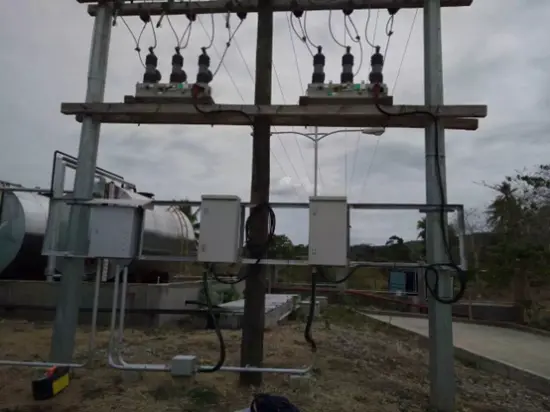 RW Energy Bangladesh 230 Units 11 kV Vacuum Circuit Breaker Intelligence Retrofit Case StudyFocusing on Bangladesh’s distribution network automation upgrade demands, the intelligent retrofitting of 230 sets of 11kV VCBs integrates intelligent control and anti-corrosion technologies. Adopting a cost-effective renewal model for legacy grids, it enables equipment reuse and efficiency improvement, advances regional distribution network digital transformation, and sets a benchmark for the intelligent upgrading of aging switchgear in South Asia.01 Project Overview1.1 Project BackgroundIn Dec
 -
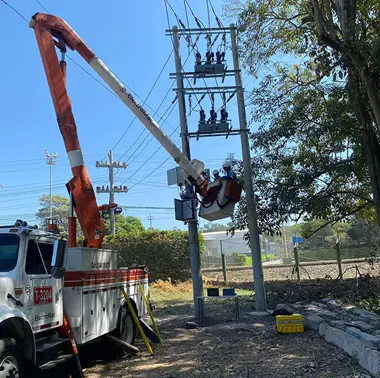 RW Energy Colombia PV Plant 35 kV Recloser Controller Project Case StudyFacing the frequency fluctuation and grid connection challenges of Colombia’s low-inertia photovoltaic power grid, this solution leverages customized recloser control and optimized frequency protection technologies to precisely adapt to the local 60Hz grid standard. It effectively addresses grid fluctuation issues under complex grid connection conditions, delivering a highly reliable and strong anti-interference grid protection solution for photovoltaic power plants and ensuring their stable and
 -
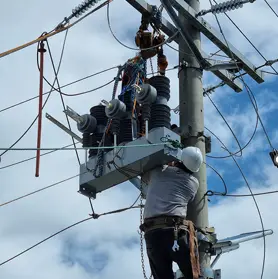 RW Energy Tanzania 325 Units 33 kV Auto Recloser Project Case StudyFocusing on the medium‑voltage distribution network upgrading demands in Tanzania, this solution adopts 325 sets of high‑reliability 33kV auto-reclosers integrated with FTU intelligent control and high environmental adaptability technologies to isolate faults and restore power supply rapidly, consolidating the stable foundation of regional power grids.01 Project Overview1.1 Project BackgroundIn 2025, 325 units of 33 kV auto reclosers were officially supplied and applied to the Tanzania medium-vo
 -
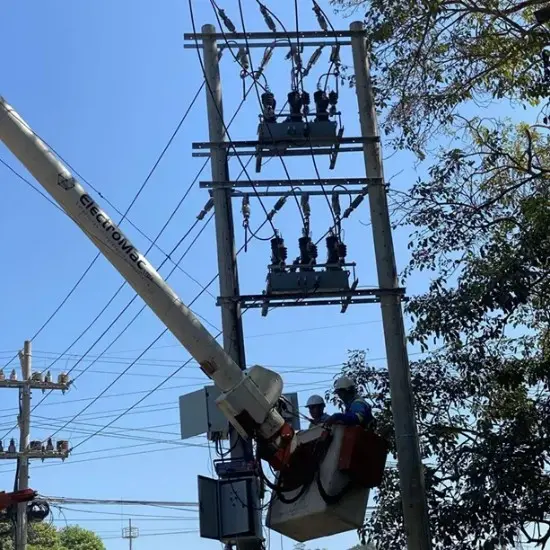 420 Units of 11 kV Automatic Reclosers for Dhaka Grid Upgrade01 General Overview: Dhaka 11 kV Distribution Grid Upgrade1.1 Project BackgroundBangladesh is currently undergoing a period of rapid economic and industrial development, and the growing demand for electricity has placed immense pressure on the local distribution networks. However, the country's existing 11 kV backbone distribution lines are facing severe equipment aging issues. The original switchgear suffers from serious mechanical wear, resulting in not only high failure rates but also sluggis
 -
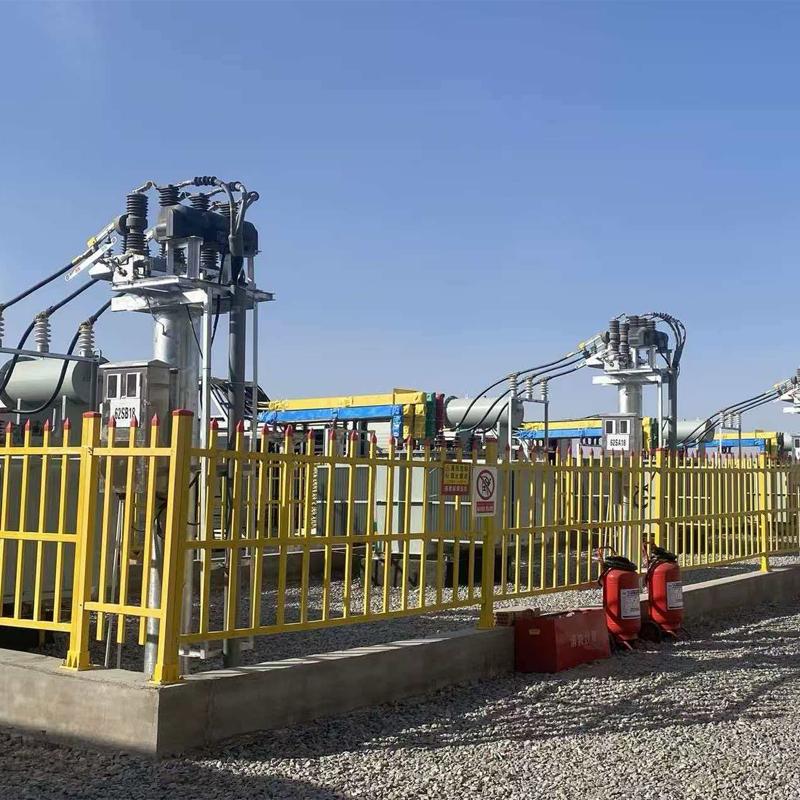 RW Energy Xinjiang Bazhou Large-scale Data Center 6 kV Industrial Grid Intelligent Power Distribution Upgrade Case StudyFocusing on the high-reliability power supply demands of data centers, this project upgrades the 6kV industrial intelligent power distribution system. It enhances anti-sandstorm and wide-temperature environmental adaptability, integrates rapid protection and remote intelligent operation and maintenance technologies, stably supports high-density computing loads, and empowers the intelligent transformation of power grids in western computing hubs.01 Project Overview1.1Project BackgroundBayingolin