Angola Dadi Energy Storage 35 kV Power Quality Improvement Solution
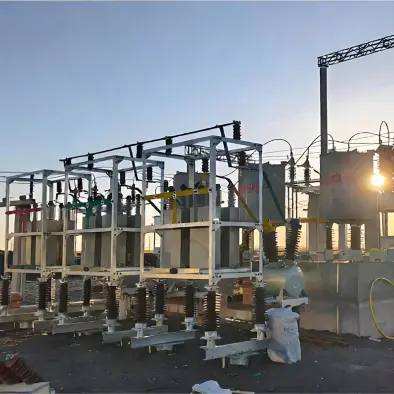
This solution targets severe harmonic pollution on the 35 kV system of the Dadi Energy Storage plant in Angola, caused by nonlinear loads such as power conversion systems (PCS). At its core is an H5+H7 high-voltage filter compensation bank with a total capacity of 7500 kvar, built on a three-in-one design concept: localized filtering, equipment protection, and reactive power compensation.
The goal is to eliminate harmonic hazards, promote safe, stable and economical grid operation, and improve system operating efficiency and supply reliability.
1. Project Background and Current-State Analysis
1.1 Project Overview
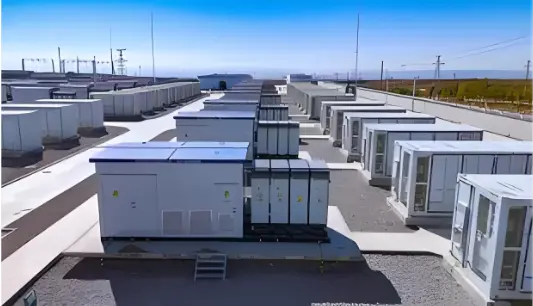
The Dadi Energy Storage power quality improvement project in Angola is a retrofit at the 35 kV voltage level. The main on-site load is the energy storage converter (PCS). As a typical nonlinear, high-harmonic load, it injects a large amount of harmonic current into the grid during operation, seriously degrading power quality.
1.2 Core Pain Points and Hazards
Field surveys and data analysis show that harmonic pollution has adversely affected the system across six dimensions:
| Dimension | Symptoms | Consequence analysis |
|---|---|---|
| Equipment safety | Transformer overheating and high noise; capacitor overcurrent and swelling | Harmonics reduce capacitive reactance and amplify current, causing resonance overvoltage and additional losses |
| Availability | PCS derated output, protection trips, frequent shutdowns | High voltage distortion triggers converter protection and derating, lowering system availability |
| Equipment life | Accelerated aging of capacitors, reactors and other components | Additional harmonic losses compound temperature rise and accelerate component degradation |
| Energy cost | Higher line losses; higher electricity bills | Harmonic currents do no useful work but generate heat losses and lower the power factor |
| Control system | False alarms from the supervisory system, abnormal data | High-frequency interference penetrates the low-voltage control system, causing sampling and logic errors |
| Electrical hazards | Protection devices mal-operate or fail to operate | Waveform distortion impairs relay protection sampling accuracy, widening incident scope |
2. Improvement Objectives and Design Basis
2.1 Improvement Objectives
Based on IEC TR 61000-3-6:2008, IEEE 519-2022, GB/T 14549-1993 "Power Quality – Harmonics in Public Supply Networks" and the project technical specification, the following core targets are set:
- Harmonic suppression: focus on filtering the dominant 5th and 7th harmonics to significantly reduce the total harmonic voltage distortion (THDu);
- Reactive power compensation: raise the system power factor above 0.95 after compensation to avoid additional charges caused by a low power factor;
- System stability: avoid parallel/series resonance and ensure the safe operation of capacitors and transformers;
- Energy saving: reduce additional losses in transformers and lines and extend equipment service life.
2.2 Design Approach
An integrated "tuned filtering + automatic switching compensation" strategy is adopted. Dedicated LC tuned branches are designed for the characteristic harmonics (6k±1) of the PCS, making each branch present a low impedance at the specific frequency so as to "absorb" the harmonic current, while remaining capacitive at the power frequency to provide reactive support.
2.3 Quantified Acceptance Targets
Based on GB/T 14549-1993 "Power Quality – Harmonics in Public Supply Networks", IEC TR 61000-3-6:2008 and the characteristics of the local Angolan grid, the following quantified targets are defined:
| Indicator | Before (estimated/measured) | After (committed target) | Remarks |
|---|---|---|---|
| Total harmonic voltage distortion (THDu) | > 5.0% (substantially exceeded) | < 3.0% | Meets the GB/T 14549-1993 limit for 35 kV systems (≤ 3.0%) |
| 5th harmonic current content | > 15% | < 3% | Targeted at the PCS characteristic harmonic |
| 7th harmonic current content | > 10% | < 2% | Targeted at the PCS characteristic harmonic |
| Power factor (PF) | 0.85 ~ 0.90 (highly variable) | ≥ 0.96 | Above the design target (≥ 0.95), in a stable operating range |
| Transformer temperature rise | Abnormally high | Back to normal range | Expected reduction of approx. 10 ~ 15 K |
| Capacitor failure rate | High (frequent swelling/fusing) | Significantly reduced | Resonance overcurrent avoided |
3. Core Technical Solution
3.1 Configuration Overview
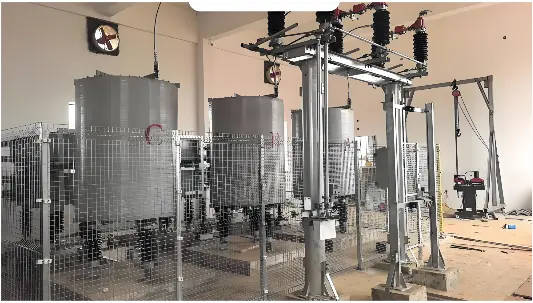
Based on the characteristics of the 35 kV system at this plant, a high-voltage filter compensation bank with a total capacity of 7500 kvar is configured as follows:
| Equipment | Specification/Type | Quantity/Capacity | Function |
|---|---|---|---|
| H5 filter branch | Nominal tuning 250 Hz (detuned to approx. 235 Hz, 4.7th) | Several groups | Absorbs 5th harmonics, also provides reactive compensation at power frequency |
| H7 filter branch | Nominal tuning 350 Hz (detuned to approx. 340 Hz, 6.8th) | Several groups | Absorbs 7th harmonics, also provides reactive compensation at power frequency |
| HV capacitors | 35 kV tank-assembled / single-phase | 7500 kvar total | Provides capacitive reactive power and supports system voltage |
| Series reactors | Dry-type / oil-immersed iron-core | Matching | Limits closing inrush current and suppresses amplification of high-order harmonics |
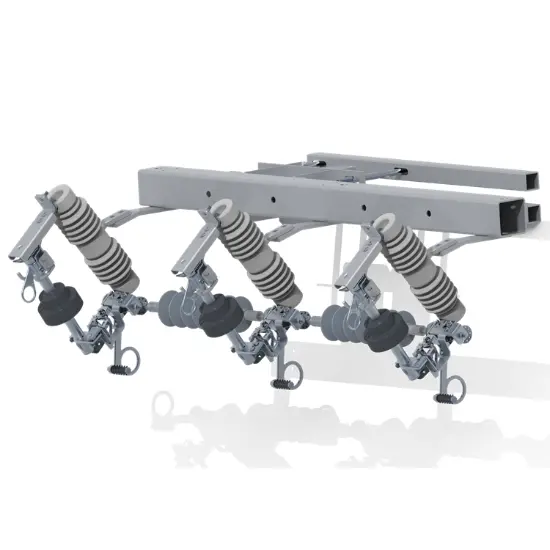
| Switching device | Low-restrike vacuum circuit breaker | Matching | Enables fast, restrike-free switching of the capacitor bank |
| Protection & monitoring | Microprocessor-based protection | 1 set | Real-time monitoring of voltage, current and temperature with multiple protection functions |
3.2 Key Technical Measures
Precision tuning technology
Using the L-C series resonance principle, the natural frequency of each filter branch is designed to absorb the 5th (250 Hz) and 7th (350 Hz) harmonics. Around these frequencies the branch impedance becomes extremely low (Z ≈ R), forming a harmonic "trap" that forces the harmonic current to flow into the filter instead of the grid.
It should be noted that, to prevent parallel resonance between the branch and the system caused by grid frequency fluctuation and component parameter drift, a detuned design is normally applied in engineering practice: although nominally tuned to the 5th and 7th, the 5th branch is actually set at about the 4.7th (approx. 235 Hz, corresponding to a reactor ratio of about 4.5%) and the 7th branch at about the 6.8th (approx. 340 Hz, corresponding to a reactor ratio of about 2.2%), leaving a safe margin to prevent harmonic amplification incidents. The final tuning point must be determined based on the background harmonic data measured on site.
Equipment thermal protection
- Transformer protection: after harmonics are filtered out, skin and eddy-current losses in the transformer drop significantly and temperature rise returns to normal. In accordance with the IEC 60076-7 thermal aging model, insulation aging is effectively slowed down.
- Capacitor protection: preventing harmonic current from flowing directly through the capacitors avoids dielectric breakdown or swelling caused by overcurrent and overvoltage.
Intelligent switching and control
- A low-restrike (restrike-free) vacuum circuit breaker with controlled (point-on-wave) closing keeps the closing inrush current within 1.5 times the rated capacitor bank current (see Section 3.3).
- The monitoring system collects grid data in real time and automatically switches filter branches according to the reactive power deficit, achieving "on-demand compensation".
Bidirectional operation adaptability
Because the harmonic signature of the energy storage PCS differs between charging and discharging, the filter branches are designed based on the harmonic spectrum measured across the full PCS operating range (charge/discharge), with switching margin reserved so that harmonics are effectively suppressed in both directions of operation.
Resonance verification
After the filter compensation bank is commissioned, the capacitive branches and the 35 kV system may form parallel resonance points. At the design stage, resonance must be verified using the on-site measured background harmonics and system impedance as inputs, and the equipment may be energized only after confirming that the resonance points avoid the characteristic harmonic frequencies such as the 5th and 7th.
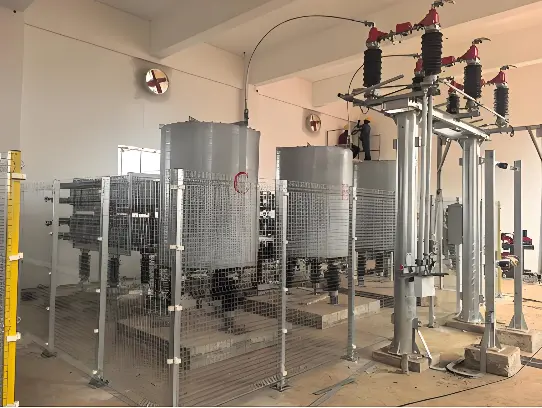
3.3 Capacitor Bank Switching Safety — Point-on-Wave Closing and Low Restrike
Given the frequent switching of capacitor banks caused by frequent regulation of the energy storage plant, a two-fold protection mechanism is adopted:
- Low-restrike vacuum switchgear: CuCr alloy contacts and an axial magnetic field (AMF) vacuum interrupter ensure that no restrike occurs when breaking capacitive current, effectively suppressing switching overvoltages.
- Intelligent point-on-wave closing controller (optional/recommended): tracks the grid voltage phase in real time and closes the contacts precisely at the voltage zero crossing (within ±1 ms). This keeps the closing inrush current within 1.5 times the rated capacitor bank current (compared with 10–20 times for random closing), greatly extending capacitor and switch life and preventing voltage shocks to the PCS.
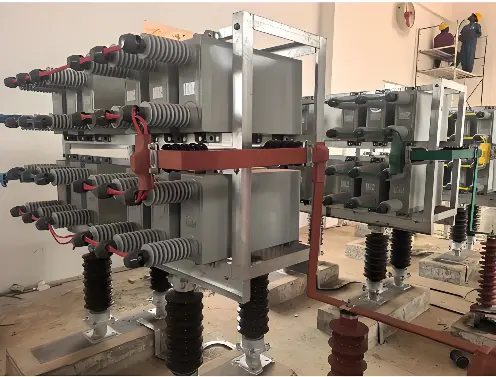
4. Features and Advantages
- Highly targeted: H5+H7 parameters are customized to the PCS load characteristics, avoiding "over-treatment" or "under-treatment".
- Strong environmental adaptability (for Angolan conditions): considering the local climate, all reactors use Class H insulation, capacitor enclosures use UV-resistant, corrosion-resistant materials, and control system PCBs receive an extra-thick conformal coating — suited to hot, humid environments.
- Integrated design: harmonic mitigation, reactive compensation and equipment protection are addressed together — one investment, multiple benefits.
- Reliable operation: a complete package with low-restrike switchgear and comprehensive protection, suited to the frequent regulation duty of energy storage plants.
5. Expected Results and Benefits
5.1 Technical Benefits
- Improved waveforms: after commissioning, the 5th and 7th harmonic current filtering rate is expected to exceed 85%, with voltage distortion meeting GB/T 14549-1993 and the project technical specification.
- Interference eliminated: mal-operation rates of protection and monitoring systems drop significantly and the station operating environment is purified.
- Grid stability: system impedance characteristics are optimized, substantially enhancing immunity to interference.
5.2 Economic and Social Benefits
| Benefit type | Details | Estimated value |
|---|---|---|
| Direct | Reduced reactive power penalty charges; lower transformer and line losses | To be quantified based on local tariffs, reactive power billing/assessment standards and measured loss data |
| Indirect | Lower equipment repair/replacement cost; reduced unplanned outage losses | Extended life of core equipment such as transformers; duration assessed per the IEC 60076-7 thermal aging model |
| Operational | Fewer PCS protection trips and unplanned shutdowns; higher system availability | Improved overall operating stability of the energy storage plant |
| Safety | Electrical fire hazards avoided; personnel safety protected | Major safety incident risk eliminated |
5.3 Expected Performance Improvement
After commissioning, the key power quality indicators are expected to improve as follows (consistent with the Section 2.3 targets; subject to acceptance measurement):
| Indicator | Before (estimated/measured) | After | Improvement/result |
|---|---|---|---|
| Total harmonic voltage distortion (THDu) | > 5.0% (substantially exceeded) | < 3.0% | Meets GB/T 14549-1993 (35 kV limit 3%) and IEEE 519-2022 requirements |
| 5th harmonic current content | > 15% | < 3% | Substantially reduced |
| 7th harmonic current content | > 10% | < 2% | Strong suppression |
| Power factor (PF) | 0.85 ~ 0.90 (highly variable) | ≥ 0.96 | Stably compliant |
| Transformer temperature rise | Abnormally high | Back to normal range | Approx. 10 ~ 15 K reduction |
| Capacitor failure rate | High (frequent swelling/fusing) | Significantly reduced | Clear improvement |
Note: the "after" figures above are expected values derived from equipment performance and system evaluation. Final values are subject to commissioning acceptance measurements.
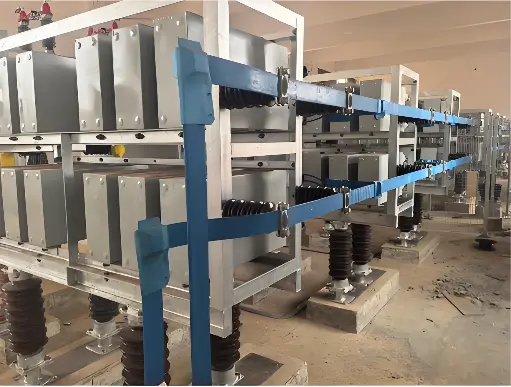
6. Project Implementation and O&M Support
6.1 Implementation Process
- On-site survey: measure background harmonics on the 35 kV busbar and load characteristics (including PCS charge/discharge conditions).
- Simulation: build a system model to verify filtering performance and resonance points.
- Manufacturing: factory prefabrication with strict routine tests (withstand voltage, partial discharge, protection commissioning).
- Installation & commissioning: on-site installation, secondary wiring, integrated system testing.
- Acceptance & commissioning: load test, verification of targets, handover.
6.2 After-Sales Service
- Technical training: principles, operation and troubleshooting training for the owner.
- Periodic inspection: regular checks of capacitor capacitance, reactor temperature and connection point tightness.
- Emergency response: 7×24 technical support for rapid fault response.
Conclusion
Through the scientific configuration of a 7500 kvar H5+H7 filter compensation bank, this solution not only resolves the current power quality pain points of the Dadi Energy Storage project in Angola, but also builds a solid electrical safety defense line for the plant.
By addressing equipment protection and system stability alongside harmonic mitigation, it delivers both economic and safety benefits — a reliable power quality improvement solution for energy storage plants.
Deployed Equipment
-
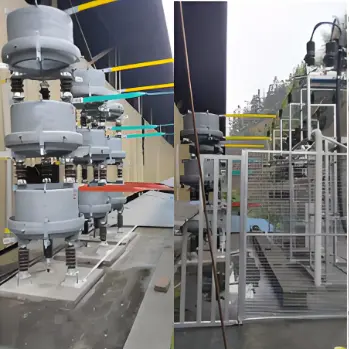
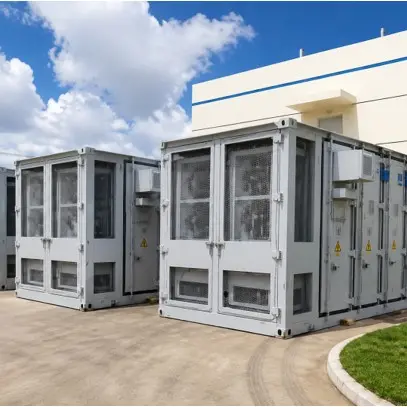
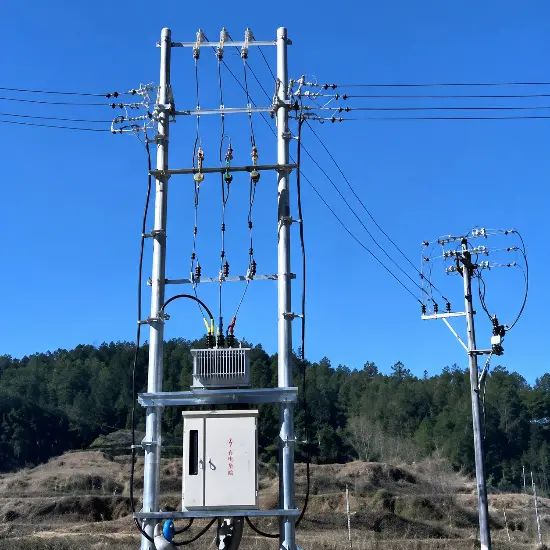
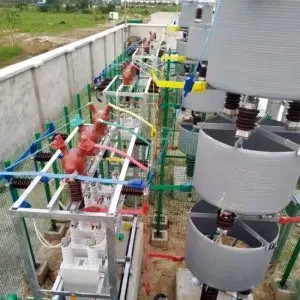 High-Voltage Reactive Power Compensation Device – Outdoor Frame TypeThe RWTBBSeries High-Voltage Reactive Power Compensation Device &ndash; Outdoor Frame Typeis designed for6kV, 10kV, 24kV, and 35kV three-phase power systems.It provides effective reactive power compensation to: Stabilize and balance network voltage Improve overall power factor Reduce energy losses in the distribution network Enhance power supply reliability and qualityEngineered for outdoor applications, this frame-structured compensation device ensures durable operation and high efficiency
Reference Projects
-
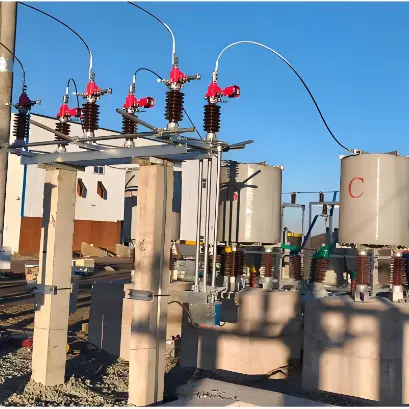 Mongolia South Gobi Coal Washing Plant 35 kV Power Quality Success StoryThe 35 kV power quality improvement project at a coal washing plant in South Gobi Province, Mongolia, is a dedicated retrofit addressing the severe harmonic pollution caused by the concentrated connection of variable-frequency-drive (VFD) equipment in the coal washing industry. A 5000 kvar H5 filter compensation bank was installed to deliver harmonic mitigation and reactive power compensation in one.Since commissioning, the dominant 5th harmonic has been effectively filtered, harmonic distortion
 -
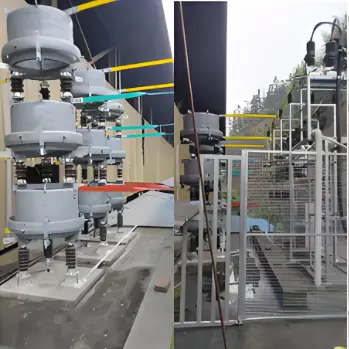 Jiangsu Suqian Rongxin Metal Products Power Quality Improvement Project-A success story in medium-frequency furnace harmonic mitigation and power quality improvementThe Jiangsu Suqian Rongxin Metal Products power quality improvement project is a dedicated retrofit addressing the severe harmonic pollution caused by the concentrated connection of nonlinear loads such as medium-frequency furnaces in the metal products industry. An H5+H7+H11 filter compensation bank with a total capacity of 17550 kvar was installed to deliver harmonic mitigation and reactive power compensation in one.Since commissioning, the dominant 5th, 7th and 11th characteristic harmonics h
 -
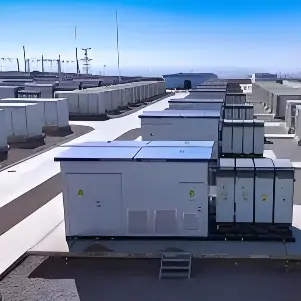 Angola Dadi Energy Storage 35 kV Power Quality Improvement success storyThe Angola Dadi Energy Storage power quality improvement project is a 35 kV power quality retrofit implemented on an existing energy storage plant. On-site nonlinear, high-harmonic loads such as inverters — power conversion systems (PCS) — are densely concentrated, a typical harmonic-source-intensive scenario in which harmonic pollution seriously hampers production efficiency and product quality.An H5+H7 filter compensation bank with a total capacity of 7500 kvar was provided to deliver harmonic
 -
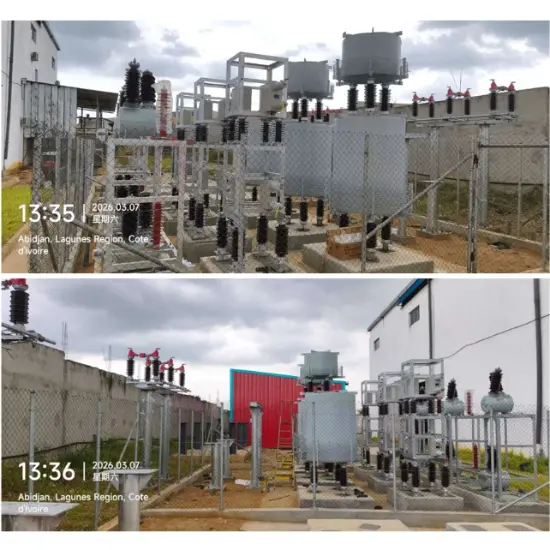 Abidjan 35kV Substation High Voltage Reactive Power Compensation Project: A Successful Case Study01 Project Overview1.1 Project BackgroundIn March 2026, RW Energy successfully delivered and deployed four sets of RWTBBX-35-2500/208.4-BLW high-voltage reactive power compensation devices for the 35kV substation upgrade project across core urban substations in Abidjan, Côte d’Ivoire, with stable and reliable operation confirmed post-installation.Climate Adaptation DesignSpecifically engineered for West Africa’s harsh tropical environment, the equipment integrates IP54-rated ca