Mongolia Coal Washing Plant 35 kV Power Quality Improvement Solution
This solution serves the 35 kV busbar of a coal washing plant in South Gobi Province, Mongolia. Aimed at the harmonic pollution, low power factor and equipment overheating caused by the concentrated connection of large numbers of variable-frequency drives (VFDs) powering belt conveyors, crushers and heavy-medium pumps.
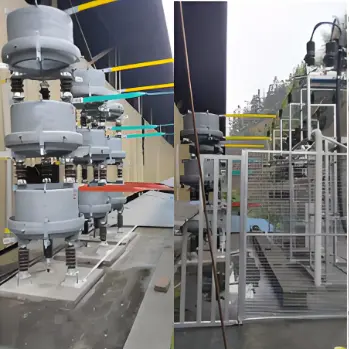
It configures a 5000 kvar H5 high-voltage filter compensation bank to deliver harmonic mitigation, reactive power compensation and equipment protection in one — with dedicated design adaptations for Mongolia's extreme cold and windy, sandy climate to ensure long-term stable operation of the coal washing production line.
Project Overview
| Item | Details |
|---|---|
| Project name | Mongolia coal washing plant 35 kV power quality improvement project |
| Project type | Industrial enterprise power quality retrofit |
| Application scenario | Coal washing plant 35 kV busbar (high-harmonic loads such as VFDs) |
| Key problems | Harmonic pollution, low power factor, equipment overheating, harsh environment |
| Core solution | H5 high-voltage filter compensation bank, 5000 kvar total capacity |
| Design concept | Precision tuning, safe switching and environmental adaptability (three in one) |
| Applicable standards | IEEE 519‑2022 Table 2 (Voltage Distortion Limits) / Table 3 (Current Distortion Limits), the assessment method of IEC 61000‑3‑6 (Harmonic Emission Limit Allocation), Table 2 of GB/T 14549‑1993 (Harmonic Voltage Limits for Public Utility Grids, THDu ≤3% for 35 kV systems) |
| Expected results | Compliant harmonics, higher power factor, longer equipment life, lower O&M costs |
1. Project Background and Pain-Point Analysis
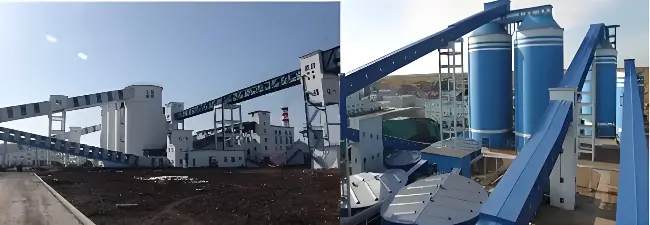
Located in South Gobi Province, Mongolia, the project serves the power supply system of a coal washing plant production line. Because the coal washing process relies heavily on large variable-frequency drives for belt conveyors, crushers and heavy-medium pumps, the grid faces severe challenges:
- Severe harmonic pollution: the characteristic harmonics (mainly the 5th and 7th) generated by the VFD rectifier stage distort the voltage waveform and seriously interfere with precision control systems such as PLCs and DCS;
- Large reactive losses: the system power factor is low, exposing the plant to high reactive power billing penalties, and transformer utilization drops;
- Equipment hazards: harmonic-induced skin effect causes abnormal heating of transformers and cables, while the capacitor bank is prone to swelling and even explosion due to harmonic amplification;
- Harsh environment: Mongolia's bitter winters and heavy sandstorms place extreme demands on the insulation and heat dissipation performance of outdoor electrical equipment.
2. Core Technical Solution
2.1 Configuration Overview
Based on the 35 kV busbar, the 5000 kvar total compensation requirement and the VFD load characteristics, the high-voltage filter compensation bank is configured as follows:
| Equipment | Specification/Type | Core function and selection rationale |
|---|---|---|
| H5 filter branch | Tuning frequency 235 Hz (4.7th) | Primary mitigation: absorbs the dominant 5th harmonic from VFDs, also provides reactive compensation at power frequency |
| HV capacitors | 35 kV tank-assembled / single-phase | Capacitive unit: harmonic-tolerant dielectric, strong overcurrent capability, suited to frequent switching |
| Series reactors | Dry-type air-core / iron-core | Inrush suppression: forms the tuned branch with capacitors, limits closing inrush and suppresses harmonic amplification |
| Discharge coil | 35 kV oil-immersed | Safe discharge: ensures capacitor residual voltage falls below 50 V within 5 min after de-energization |
| Vacuum circuit breaker | Low-restrike type | Precision switching: suppresses switching overvoltage, protects the capacitor bank against restrike damage |
| Intelligent controller | Harmonic analysis type | Control core: monitors harmonics and reactive power in real time and automatically adjusts the switching strategy |
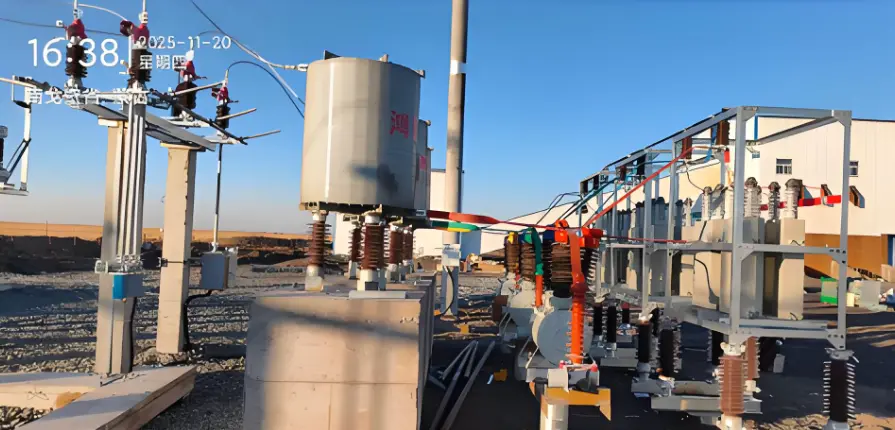
2.2 Key Technical Measures
2.2.1 Precision Tuning and Anti-Resonance Technology
Using the L-C series resonance principle, the natural frequency of the H5 filter branch is designed to absorb the 5th harmonic. In engineering practice a detuned design is applied (the 5th branch is designed at the 4.7th), leaving a safe margin to prevent harmonic amplification incidents caused by system parameter drift, and ensuring system stability even as the coal washing plant load fluctuates.
2.2.2 Environmental Adaptability Design (for Mongolian Conditions)
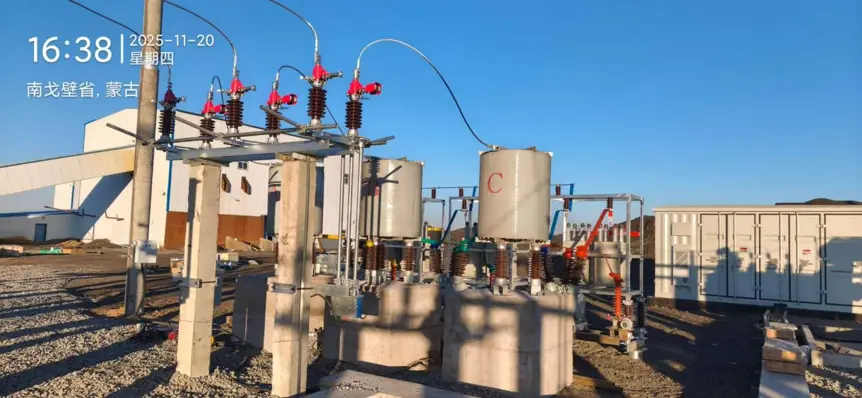
- Cold-resistance design: all outdoor equipment uses low-temperature-resistant materials (e.g., −40 ℃ grade sealing rings, low-temperature lubricants) to prevent brittle cracking or refusal to operate in winter;
- Sand and dust resistance: control cabinet enclosures are upgraded to IP54 or above, and key components are fitted with dust covers to prevent coal dust and sand ingress from causing shorts; for sandstorm-prone areas, outdoor enclosure protection can be further upgraded to IP65.
2.2.3 Intelligent Switching and Control
A low-restrike vacuum circuit breaker with controlled (point-on-wave) closing keeps the closing inrush current within 1.5 times the rated capacitor bank current. The monitoring system collects grid data in real time and automatically switches filter branches according to the reactive power deficit, achieving "on-demand compensation".
For example:configured as N groups (e.g., 2×2500 kvar or 3×1667 kvar) with sequential switching and a minimum re-switching interval (e.g., 30 s) to limit inrush and voltage flicker
3. Features and Advantages
3.1 Features
| Feature | Description |
|---|---|
| Highly targeted | H5 parameters are customized to the VFD load characteristics, with reserve H7/H11 expansion interfaces for later needs, avoiding "over-treatment" or "under-treatment" |
| Cost-effective | Prioritizes the most prevalent 5th harmonic for minimal investment and maximum improvement |
| Integrated design | Harmonic mitigation, reactive compensation and equipment protection together — one investment, multiple benefits |
| Reliable operation | Complete package with low-restrike switchgear and comprehensive protection, suited to frequent plant start/stop duty |
3.2 Solution Comparison and Selection Basis
For coal washing plant VFD harmonic mitigation, the mainstream approaches are conventional fixed capacitor compensation, active power filters (APF) and the H5 filter compensation bank proposed here. The three approaches are compared and the selection basis is as follows:
| Comparison dimension | Conventional capacitor compensation | APF (active power filter) | This solution: H5 filter bank |
|---|---|---|---|
| Harmonic mitigation | No filtering function; prone to parallel resonance with the system, amplifying harmonics | Dynamic tracking mitigation; good results across the full spectrum | Efficient absorption of the dominant 5th harmonic, with 7th/11th suppression as well |
| Reactive compensation | Can compensate reactive power at power frequency, but constrained by resonance | Active equipment is not suitable for large-capacity reactive compensation | Reactive compensation and harmonic filtering in one |
| Investment cost | Lowest, but high failure rate and poor results | Extremely costly at 5000 kvar class; poor cost-effectiveness | Moderate; one investment, multiple benefits |
| Operation & maintenance | Capacitors fail frequently, heavy maintenance | Many power units, high cooling requirements, complex maintenance | Complete passive equipment, simple structure, reliable operation |
| Suitable scenarios | Conventional compensation with no harmonic loads | Small-to-medium capacity, complex-spectrum dynamic mitigation | Industrial sites with large-capacity VFD loads and well-defined harmonic characteristics |
4. Expected Results and Benefits
4.1 Technical Benefits
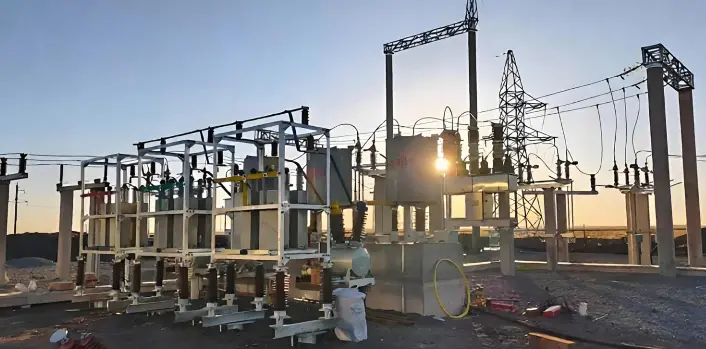
- Improved waveforms: after commissioning, the 5th harmonic current filtering rate is expected to exceed 85%, with system voltage distortion significantly reduced; the reserved H7/H11 expansion branch interfaces allow further mitigation based on measured results to ensure full compliance with the IEEE 519-2022 harmonic limits (assessed per IEC 61000-3-6 and cross-referenced with GB/T 14549-1993);
- Interference eliminated: mal-operation rates of protection and monitoring systems drop significantly and the station operating environment is purified;
- Grid stability: system impedance characteristics are optimized, substantially enhancing immunity to interference.
4.2 Economic and Social Benefits
| Benefit type | Details | Estimated value |
|---|---|---|
| Direct | Reduced reactive power penalty charges; lower transformer and line losses | To be quantified based on local tariffs, reactive power assessment standards and measured loss data; verified by actual electricity bills after commissioning |
| Indirect | Lower equipment repair/replacement cost; reduced unplanned outage losses | Extended life of core equipment such as transformers; duration assessed per the IEC 60076-7 thermal aging model |
| Operational | Fewer protection trips and unplanned shutdowns; higher line availability | Improved continuous production line stability |
| Safety | Electrical fire hazards avoided; personnel safety protected | Major safety incident risk eliminated |
4.3 Expected Performance Improvement
After commissioning, the key power quality indicators are expected to improve as follows (subject to acceptance measurement):
| Indicator | Before (current status) | After | Improvement/result |
|---|---|---|---|
| Total harmonic voltage distortion (THDu) | 8.5% ~ 12% (substantially exceeded) | < 3% | Meets IEEE 519-2022 and GB/T 14549-1993 (35 kV limit 3%) requirements |
| 5th harmonic current content | 25% ~ 30% | < 4% | Substantially reduced |
| 7th harmonic current content | 15% ~ 20% | < 3% | Strong suppression |
| Power factor (PF) | 0.75 ~ 0.82 (highly variable) | 0.96 ~ 0.98 | Stably compliant |
| Capacitor failure rate | Avg. 2 ~ 3 groups damaged per month | Substantially reduced | Clear improvement |
| Transformer operating temperature | 85 ℃ ~ 95 ℃ (high-temperature alarm) | 65 ℃ ~ 70 ℃ | Approx. 20 ℃ reduction |
Note: the "after" figures above are expected values derived from equipment performance and system evaluation. Final values are subject to commissioning acceptance measurements.
5. Full Lifecycle O&M Support System
To ensure long-term stable operation of the project in Mongolia's remote area, full-lifecycle services covering "planning — construction — operation — decommissioning" are provided:
5.1 Planning and Design Phase
- In-depth survey: measure background harmonics on the 35 kV busbar and coal washing plant load characteristics (including start/stop and multiple-machine parallel conditions) and build a high-precision simulation model;
- Customized design: optimize equipment selection and layout for the South Gobi climate, reserving future expansion interfaces.
5.2 Construction and Commissioning Phase
- Factory prefabrication: strict routine factory tests (withstand voltage, partial discharge, protection commissioning) ensure "zero-defect" delivery;
- On-site integrated testing: load testing verifies that all indicators meet the targets, and operation and maintenance training ensures the owner's personnel are fully proficient.
5.3 Operation and Maintenance Phase
- Remote monitoring: an intelligent monitoring platform provides real-time equipment status and power quality data, enabling fault alarm;
- Periodic inspection: annual on-site inspection by technical staff covering capacitor capacitance, reactor temperature and connection point tightness;
- Emergency response: 7×24 technical support with a stock of key spare parts for rapid fault response and repair.
5.4 Decommissioning and Upgrade Phase
- Life assessment: regular assessment of equipment health to plan replacement or upgrade in advance;
- Environmental disposal: environmentally compliant dismantling and recycling services at decommissioning to avoid pollution.
6. Conclusion
Through the scientific configuration of a 5000 kvar H5 filter compensation bank, this solution systematically resolves the current power quality pain points of the Mongolia coal washing plant. It goes beyond equipment delivery to emphasize full-lifecycle value creation — from precise harmonic mitigation and higher power factor to adaptation to extreme environments and long-term stable operation — building a solid electrical safety defense line for the plant.
By addressing equipment protection and system stability alongside harmonic mitigation, it delivers both economic and safety benefits — a reliable power quality improvement solution for the coal washing industry.
Deployed Equipment
-
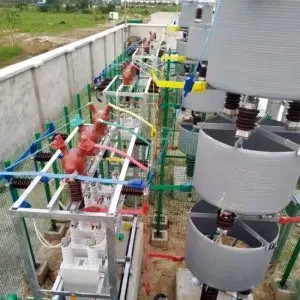 High-Voltage Reactive Power Compensation Device – Outdoor Frame TypeThe RWTBBSeries High-Voltage Reactive Power Compensation Device &ndash; Outdoor Frame Typeis designed for6kV, 10kV, 24kV, and 35kV three-phase power systems.It provides effective reactive power compensation to: Stabilize and balance network voltage Improve overall power factor Reduce energy losses in the distribution network Enhance power supply reliability and qualityEngineered for outdoor applications, this frame-structured compensation device ensures durable operation and high efficiency
Reference Projects
-
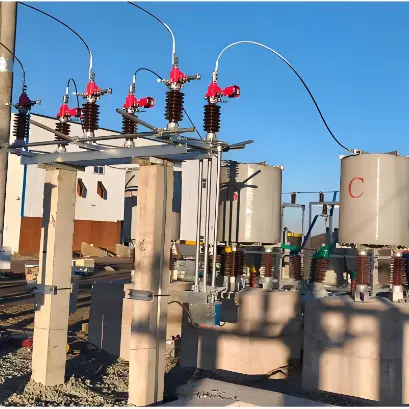 Mongolia South Gobi Coal Washing Plant 35 kV Power Quality Success StoryThe 35 kV power quality improvement project at a coal washing plant in South Gobi Province, Mongolia, is a dedicated retrofit addressing the severe harmonic pollution caused by the concentrated connection of variable-frequency-drive (VFD) equipment in the coal washing industry. A 5000 kvar H5 filter compensation bank was installed to deliver harmonic mitigation and reactive power compensation in one.Since commissioning, the dominant 5th harmonic has been effectively filtered, harmonic distortion
 -
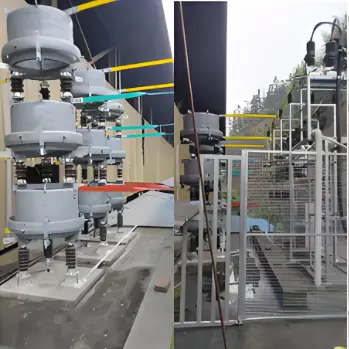 Jiangsu Suqian Rongxin Metal Products Power Quality Improvement Project-A success story in medium-frequency furnace harmonic mitigation and power quality improvementThe Jiangsu Suqian Rongxin Metal Products power quality improvement project is a dedicated retrofit addressing the severe harmonic pollution caused by the concentrated connection of nonlinear loads such as medium-frequency furnaces in the metal products industry. An H5+H7+H11 filter compensation bank with a total capacity of 17550 kvar was installed to deliver harmonic mitigation and reactive power compensation in one.Since commissioning, the dominant 5th, 7th and 11th characteristic harmonics h
 -
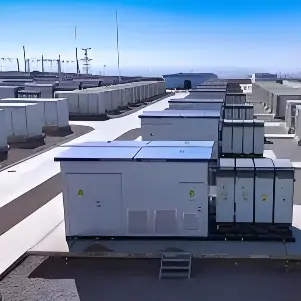 Angola Dadi Energy Storage 35 kV Power Quality Improvement success storyThe Angola Dadi Energy Storage power quality improvement project is a 35 kV power quality retrofit implemented on an existing energy storage plant. On-site nonlinear, high-harmonic loads such as inverters — power conversion systems (PCS) — are densely concentrated, a typical harmonic-source-intensive scenario in which harmonic pollution seriously hampers production efficiency and product quality.An H5+H7 filter compensation bank with a total capacity of 7500 kvar was provided to deliver harmonic
 -
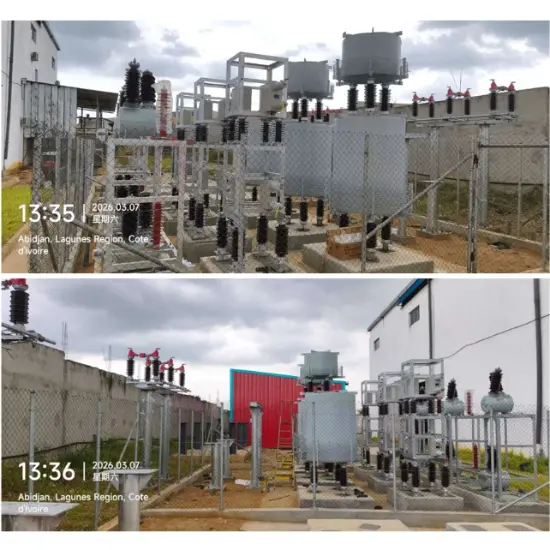 Abidjan 35kV Substation High Voltage Reactive Power Compensation Project: A Successful Case Study01 Project Overview1.1 Project BackgroundIn March 2026, RW Energy successfully delivered and deployed four sets of RWTBBX-35-2500/208.4-BLW high-voltage reactive power compensation devices for the 35kV substation upgrade project across core urban substations in Abidjan, Côte d’Ivoire, with stable and reliable operation confirmed post-installation.Climate Adaptation DesignSpecifically engineered for West Africa’s harsh tropical environment, the equipment integrates IP54-rated ca