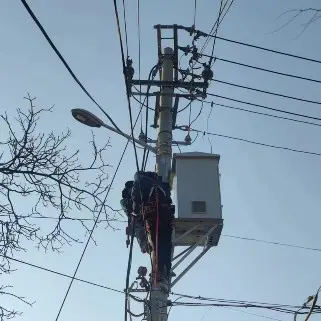
Angola Dadi Energy Storage 35 kV Power Quality Improvement success story
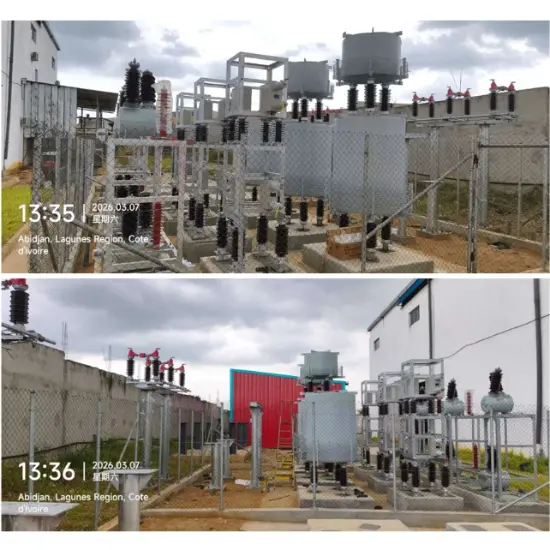
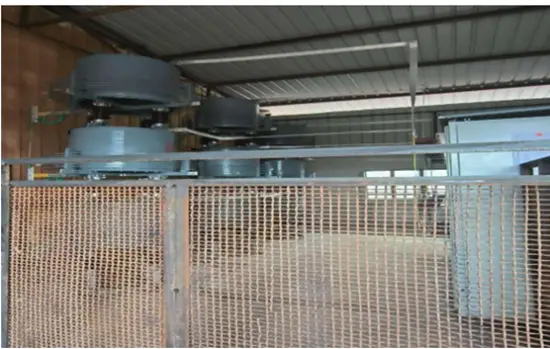
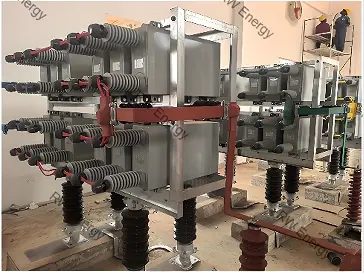
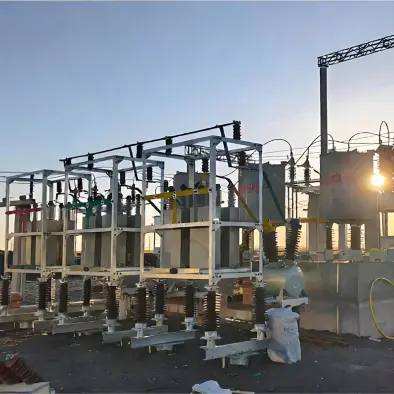
An H5+H7 filter compensation bank with a total capacity of 7500 kvar was provided to deliver harmonic mitigation and reactive power compensation in one.
Since commissioning, the dominant 5th and 7th harmonics have been effectively filtered: equipment heating is reduced, industrial-control interference is alleviated, the grid runs more stably, the equipment lasts longer, and electricity losses and costs have fallen in parallel.
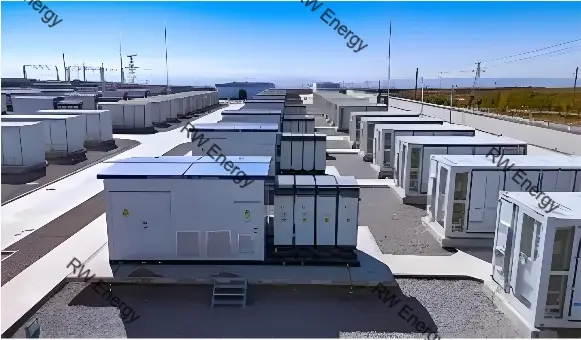
Project Facts
| Item | Details |
|---|---|
| Project name | Angola Dadi Energy Storage 35 kV power quality improvement project |
| Project type | 35 kV power quality retrofit |
| Application scenario | Energy storage plant (concentrated connection of nonlinear loads such as PCS) |
| Key problems | 5th and 7th harmonic pollution; risk of harmonic amplification and resonance overvoltage |
| Core solution | H5+H7 filter compensation bank, 7500 kvar total capacity |
| Design concept | Source-level filtering, equipment protection, reactive power compensation (three in one) |
| Applicable standards | IEEE 519-2022 (limits), IEC 61000-3-6 (assessment), GB/T 14549-1993 (reference) |
| Key results | 5th/7th harmonics effectively filtered; higher power factor; lower equipment temperature rise; reduced energy consumption and electricity costs |
1. Project Background
1.1 Project Overview
This project is a 35 kV power quality retrofit attached to the Dadi Energy Storage plant in Angola, focused on comprehensive power quality improvement of the high-voltage busbar. On-site devices such as PCS inverters are densely concentrated nonlinear, high-harmonic loads — a typical harmonic-source-intensive scenario where harmonic pollution directly constrains production efficiency and product quality, making power quality mitigation an urgent requirement.
1.2 Industry Background
With the large-scale construction of energy storage plants, harmonic pollution caused by the concentrated connection of power electronic equipment such as PCS is becoming increasingly prominent:
- Harmonic sources: nonlinear loads of the three-phase bridge rectifier type produce harmonic components dominated by the 5th and 7th orders;
- Spreading hazards: if left unmitigated, harmonics threaten the safety of capacitors, transformers and other equipment and constrain the performance of the energy storage system;
- Industry value: this project provides a replicable engineering benchmark and an important practical reference for power quality mitigation in the energy storage scenario.
2. Customer Challenges
2.1 Harmonic Environment at a Glance
The on-site PCS inverters are typical nonlinear loads producing harmonic current dominated by the 5th and 7th orders. The harmonic current is amplified many-fold in the reactive power compensation capacitors, intensifying dielectric loss and equipment heating, and poses a further risk of resonance overvoltage with the system inductance. The power quality situation on the grid was severe.
2.2 Main Problems Faced
| Problem category | Typical symptoms | Impact dimension |
|---|---|---|
| Equipment damage | Harmonic current amplification and resonance overvoltage threaten capacitor and transformer safety; rising equipment failure rate | Equipment |
| Production loss | Equipment overheating and protection mal-operation interrupt production, constraining continuous production and capacity | Production |
| Electrical safety | Harmonic distortion causes protection devices to mal-operate or fail to operate, widening incident scope | Safety |
| Escalating energy cost | Additional harmonic losses raise line and equipment losses; power factor drops; electricity bills rise | Economy |
| QC rejects | Harmonic interference causes measurement deviation and process control anomalies; product QC rejection rate rises | Production quality |
| Precision mal-operation | Harmonics disturb industrial control and precision equipment, causing mal-operation and abnormal data | Production safety |
2.3 Summary of Problem Impact
Harmonics constrain project operation across four dimensions — production, equipment, safety and economy:
| Dimension | Main impact |
|---|---|
| Production | Production efficiency and product quality compromised; capacity constrained |
| Equipment | Accelerated equipment aging; shortened service life |
| Safety | Higher risk of protection mal-operation/non-operation; broader safety hazards |
| Economy | Higher line and equipment losses; rising operating costs |
3. Solution
3.1 Design Approach
Following a three-in-one design concept of "source-level filtering, equipment protection, reactive power compensation", a complete packaged power quality mitigation solution was provided:
- Source-level filtering: tuned filter branches filter harmonics locally;
- Resonance protection: a detuned protection design prevents harmonic resonance;
- Switching safety: restrike-suppressing switchgear ensures safe operation under frequent switching;
- Reactive power compensation: the power factor is raised in parallel, saving energy and cost.
3.2 System Configuration
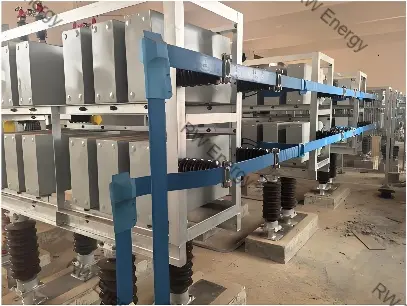
The solution configures an H5+H7 filter compensation bank with a total capacity of 7500 kvar. Key configuration:
| Subsystem | Configuration description |
|---|---|
| Filter branches | H5 and H7 tuned filter branches, tuned to the 5th and 7th harmonic frequencies respectively, covering the dominant harmonics in the system |
| Capacitor bank | Provides reactive power compensation at power frequency while filtering harmonics |
| Switching device | Oil-immersed vacuum switchgear with restrike suppression, combined with current-limiting reactors and point-on-wave closing |
| Protection & monitoring | Overvoltage, overcurrent and overtemperature protection with operating status monitoring; faulty branches reliably isolated under abnormal conditions |
| Connection | Shunt connection to the 35 kV busbar |
3.3 Key Technical Points
| Key technology | Technical principle | Application value |
|---|---|---|
| Tuned filtering | Exploits the capacitive reactance vs. frequency relationship (Xc = 1/(2πfC)); L-C branches tuned to the 5th and 7th harmonic frequencies | Absorbs harmonic current locally, breaking the vicious cycle of "low-impedance absorption — high-frequency heating — resonance amplification — insulation aging" |
| Resonance protection | Detuned protection design applied | Prevents parallel resonance between the filter branches and system impedance, protecting capacitors and system insulation |
| Equipment protection | After filtering, capacitor current stress and temperature rise stay controlled; transformer additional losses and temperature rise fall | Avoids equipment derating and extends equipment life |
| Switching safety | Oil-immersed vacuum switchgear with restrike suppression, combined with current-limiting reactors and point-on-wave closing | Ensures the entire frequent switching process is free of restrike overvoltage and inrush impact |
| Reactive compensation | Filter branches are capacitive at power frequency, raising the power factor in parallel | Reduces line and transformer losses, saving electricity costs |
| Protection & monitoring | Overvoltage, overcurrent and overtemperature protection with on-line status monitoring | Faulty branches reliably isolated under abnormal conditions, ensuring system safety |
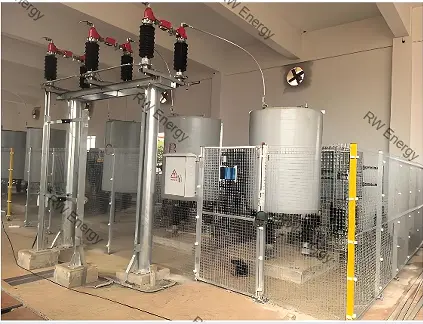
4. Project Implementation
4.1 Implementation Process
The project was implemented in five stages: "on-site survey → solution design → factory production and routine tests → on-site installation and commissioning → acceptance and commissioning":
| Phase | Work content |
|---|---|
| 1. On-site survey | Harmonic condition survey and point-of-connection confirmation completed |
| 2. Solution design | Filter branch parameter calculation and equipment selection completed |
| 3. Factory production & routine tests | Production, assembly and routine tests completed to ensure equipment quality |
| 4. On-site installation & commissioning | Installation and commissioning completed; joint testing verified the mitigation results |
| 5. Acceptance & commissioning | Commissioned into formal operation after acceptance |
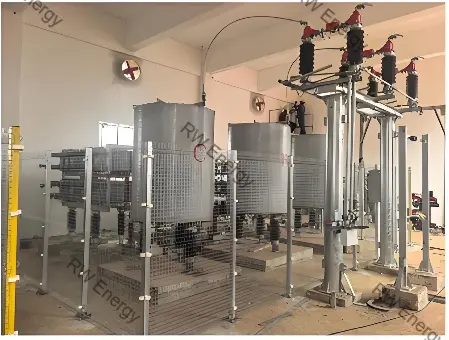
4.2 Quality and Safety Assurance
- Routine factory tests and on-site commissioning specifications strictly followed;
- Capacitors, reactors and switchgear all completed type tests and routine test requirements;
- Safety measures implemented during on-site installation and commissioning to protect equipment and personnel.
4.3 Delivery and Training
- Specialized training on operation, maintenance and troubleshooting provided to operations personnel before commissioning;
- Complete technical documentation delivered, including drawings, manuals and test reports;
- The customer is enabled to operate and maintain the system independently.
5. Project Results
5.1 Key Technical Indicator Comparison
With the 7500 kvar H5+H7 filter compensation bank installed, system power quality has been fundamentally improved. The comparison is as follows:
| Indicator | Before (current status) | After | Improvement/result |
|---|---|---|---|
| Total harmonic voltage distortion (THDu) | 7% ~ 10% (substantially exceeded) | < 3% | Meets IEEE 519-2022 and GB/T 14549-1993 (35 kV limit 3%) requirements |
| 5th harmonic current content | 20% ~ 26% | < 4% | Substantially reduced |
| 7th harmonic current content | 12% ~ 16% | < 3% | Strong suppression |
| Power factor (PF) | 0.80 ~ 0.86 (highly variable) | ≥ 0.95 | Stably compliant |
| Capacitor and equipment temperature rise | Clearly elevated | Back to normal range | Clear improvement |
| Equipment failure rate | High, frequent maintenance | Substantially reduced | Clear improvement |
5.2 Technical Results
| Result | Improvement |
|---|---|
| Harmonic mitigation | Dominant 5th and 7th harmonics effectively filtered; harmonic current significantly reduced |
| Reactive compensation | Power factor raised; compensation effective from the start |
| Safety protection | Harmonic overcurrent and resonance overvoltage hazards eliminated |
| Equipment condition | Capacitor and transformer operating conditions clearly improved |
5.3 Economic Benefits
- Electricity cost savings: improved power factor lowers electricity expenditure;
- Energy efficiency gain: lower electricity losses improve the plant's overall energy efficiency;
- Cost optimization: longer equipment life reduces maintenance and replacement costs.
5.4 Operating Performance
- Equipment heating reduced and equipment failure rate down;
- Industrial-control interference alleviated; precision components, metering and protection devices operate stably; QC rejection rate down;
- The grid runs more stably, the equipment lasts longer, and electricity losses are reduced.
6. Customer Value
| Value dimension | Value delivered |
|---|---|
| Production assurance | Production efficiency and product quality safeguarded; capacity delivered stably |
| Equipment investment | Longer equipment life; lower maintenance and replacement costs |
| Economic return | Improved power factor; lower electricity and loss costs; well-defined investment return |
| Safety & reliability | More stable grid operation; significantly reduced electrical safety risks |
7. Summary and Outlook
7.1 Project Significance
This project provides a replicable engineering benchmark for power quality mitigation in the energy storage scenario:
- The concentrated connection of power electronic equipment such as PCS has become a major source of grid harmonic pollution;
- Using an integrated filtering-plus-compensation scheme, this project systematically addressed the combined hazards that harmonics impose on capacitors, transformers and production control systems;
- It validated the three-in-one mitigation concept of "source-level filtering, equipment protection, reactive power compensation".
7.2 Outlook
As the demand for power quality mitigation in energy storage, renewable energy and industrial applications continues to grow, we will continue to:
- Optimize filtering and compensation technical solutions;
- Improve complete packaged equipment and O&M service systems;
- Provide global customers with more professional, more reliable one-stop power quality solutions, helping all industries use electricity safely, stably and efficiently.
Conclusion
Centered on a 7500 kvar H5+H7 filter compensation bank, the Angola Dadi Energy Storage 35 kV power quality project systematically resolved the harmonic pollution caused by nonlinear loads such as PCS, while simultaneously providing reactive compensation and equipment protection — making the grid more stable, the equipment more durable and the electricity bill more economical.
We will continue to provide global customers with one-stop solutions for power quality and electrical equipment safety, supported by professional technical solutions and reliable packaged equipment.
Deployed Equipment
-
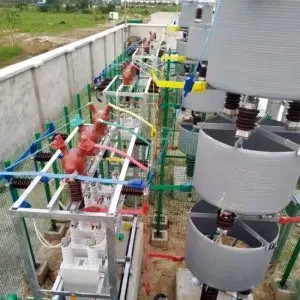 High-Voltage Reactive Power Compensation Device – Outdoor Frame TypeThe RWTBBSeries High-Voltage Reactive Power Compensation Device &ndash; Outdoor Frame Typeis designed for6kV, 10kV, 24kV, and 35kV three-phase power systems.It provides effective reactive power compensation to: Stabilize and balance network voltage Improve overall power factor Reduce energy losses in the distribution network Enhance power supply reliability and qualityEngineered for outdoor applications, this frame-structured compensation device ensures durable operation and high efficiency
Related Solutions
-
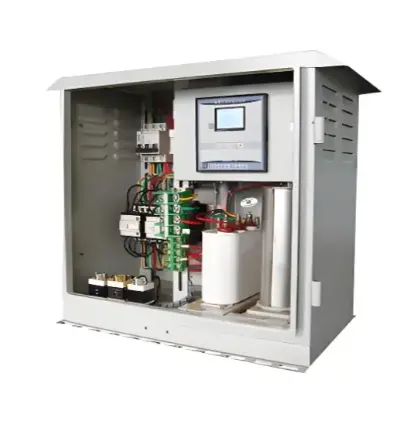 Detailed Solution for Reactive Power Compensation with High-Capacity Collection and Low-Capacity Compensation1. Scheme IntroductionIn the current electrical industry, SVG is widely adopted for reactive power compensation in high‑voltage electrical systems such as 6kV, 10kV, 20kV and 35kV. Two compensation topologies are commonly used: direct grid‑connection type and transformer step‑up type.For applications with relatively small compensation capacity, the transformer step‑up SVG scheme is more cost‑effective and thus widely applied. This scheme was developed to address low power factor in high‑voltage
 -
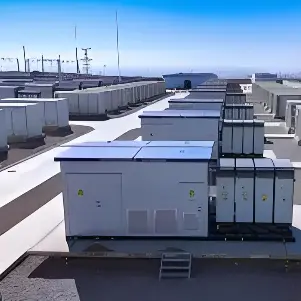 Angola Dadi Energy Storage 35 kV Power Quality Improvement SolutionThis solution targets severe harmonic pollution on the 35 kV system of the Dadi Energy Storage plant in Angola, caused by nonlinear loads such as power conversion systems (PCS). At its core is an H5+H7 high-voltage filter compensation bank with a total capacity of 7500 kvar, built on a three-in-one design concept: localized filtering, equipment protection, and reactive power compensation.The goal is to eliminate harmonic hazards, promote safe, stable and economical grid operation, and improve s
 -
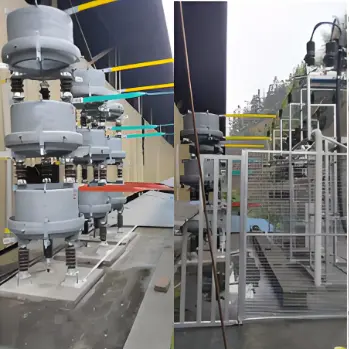 Suqian Rongxin Metal: Medium‑Frequency Furnace Harmonic Mitigation and Reactive Power Compensation SolutionThis solution targets the serious power quality problems caused by nonlinear, high-harmonic loads such as medium-frequency induction furnaces at Jiangsu Suqian Rongxin Metal Products Co., Ltd., centered on an H5+H7+H11 high-voltage filter compensation bank with a total capacity of 17550 kvar. Built around the design concept of precision filtering, reactive power compensation and voltage stabilization, it systematically resolves harmonic-induced equipment damage, lower production efficiency, pro
 -
 Mongolia Coal Washing Plant 35 kV Power Quality Improvement SolutionFor the 35 kV busbar of a Mongolia coal washing plant dominated by VFD harmonics, RW Energy proposes a5000 kvar H5 filter bank (tuned 4.7th, 235 Hz)to cut THDu from 8.5–12% to <3% and lift PF from 0.75–0.82 to 0.96–0.98 (per IEEE 519-2022).This solution serves the 35 kV busbar of a coal washing plant in South Gobi Province, Mongolia. Aimed at the harmonic pollution, low power factor and equipment overheating caused by the concentrated connection of large numbers of variable-